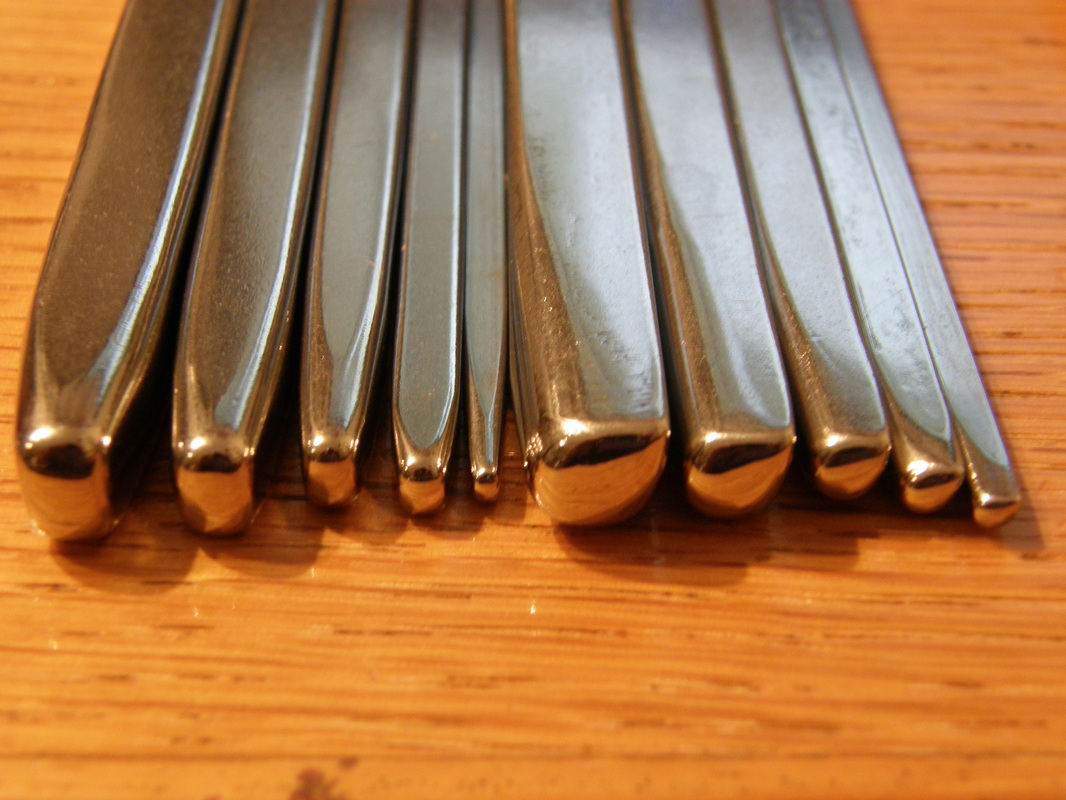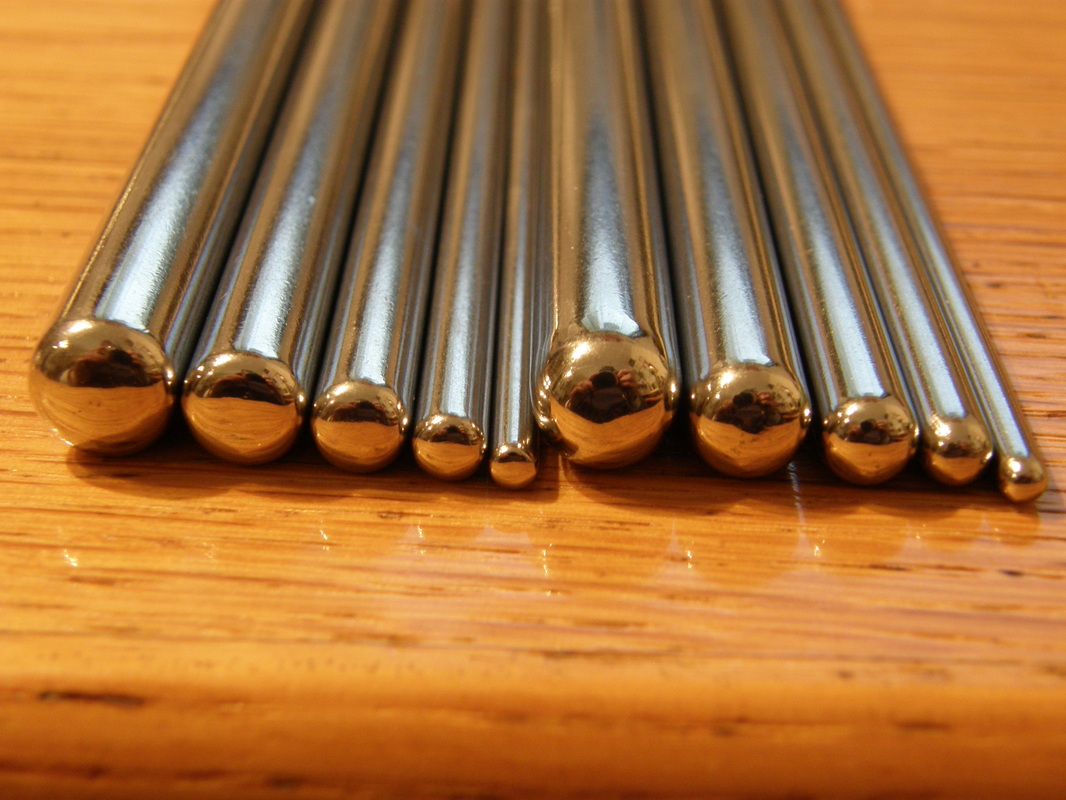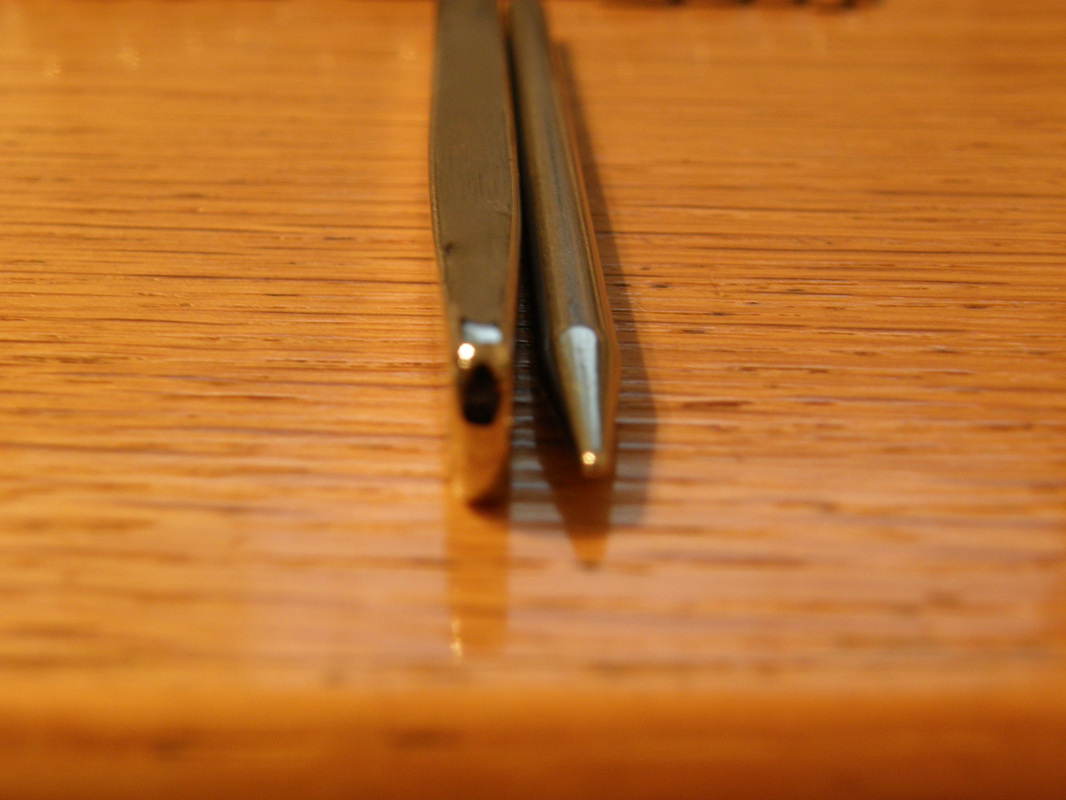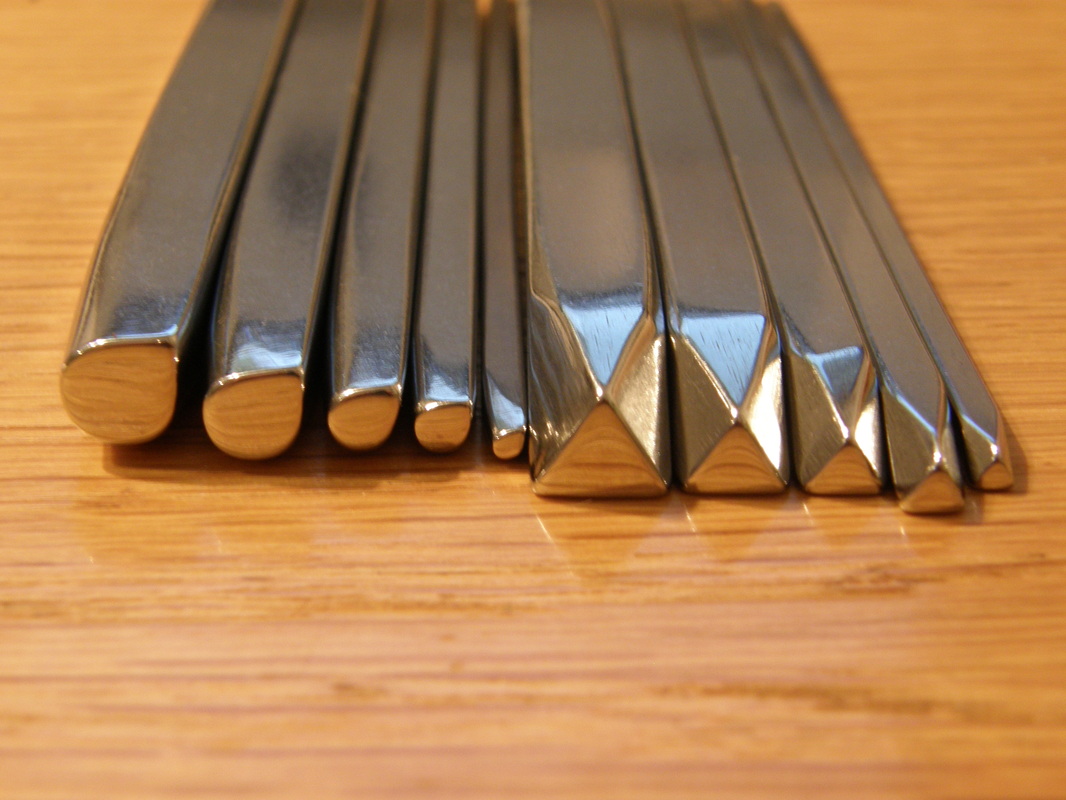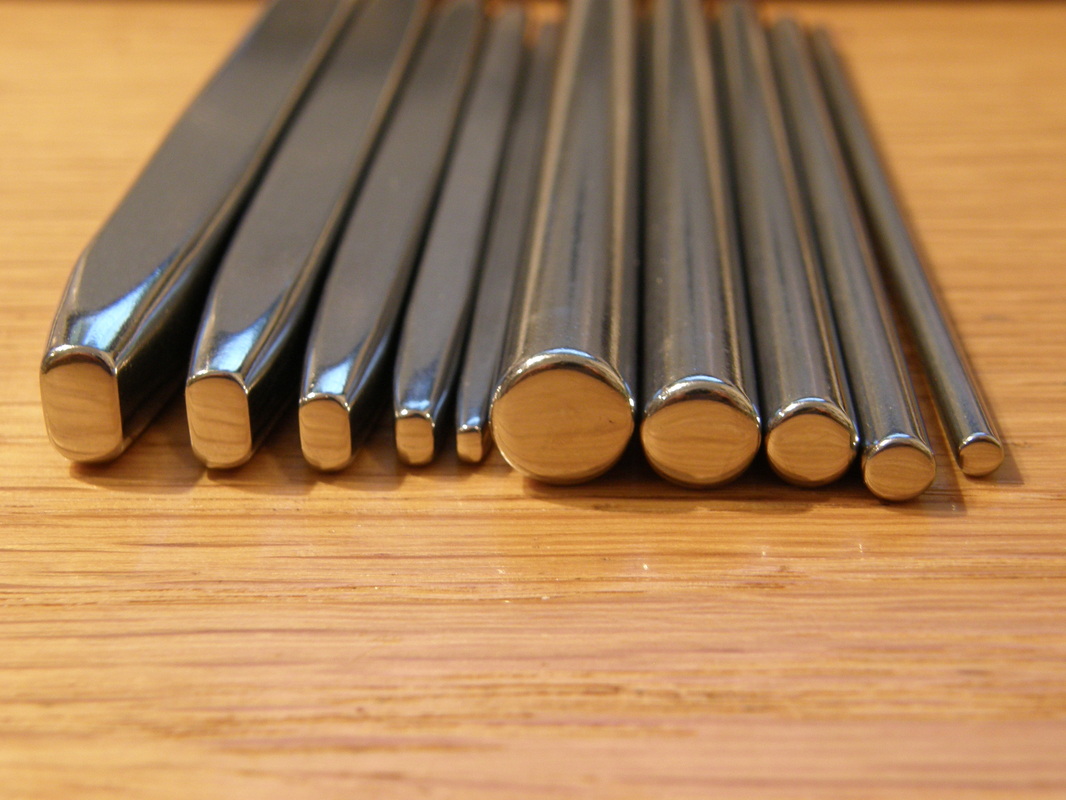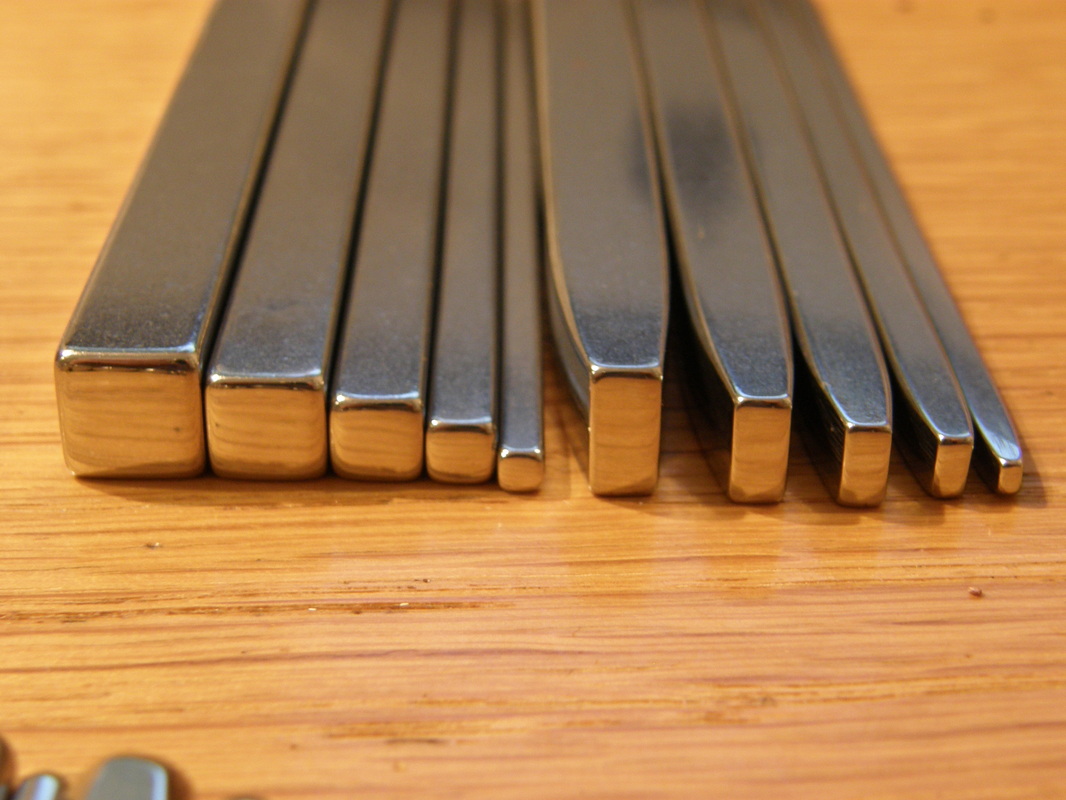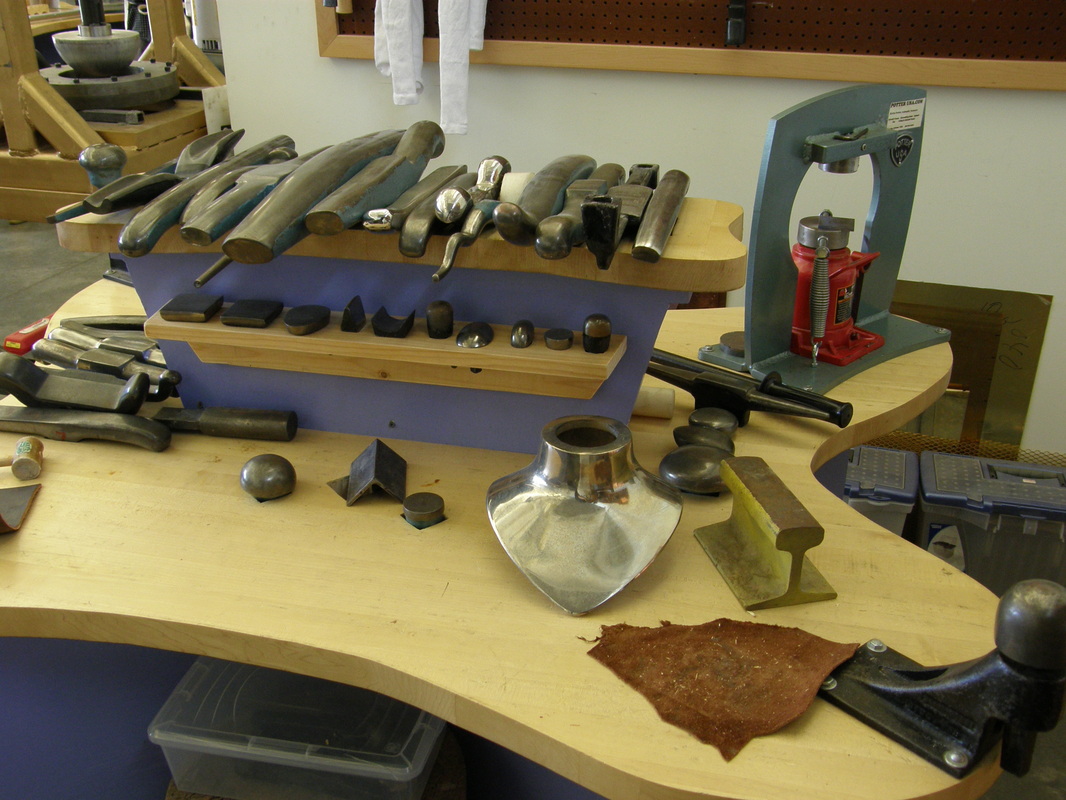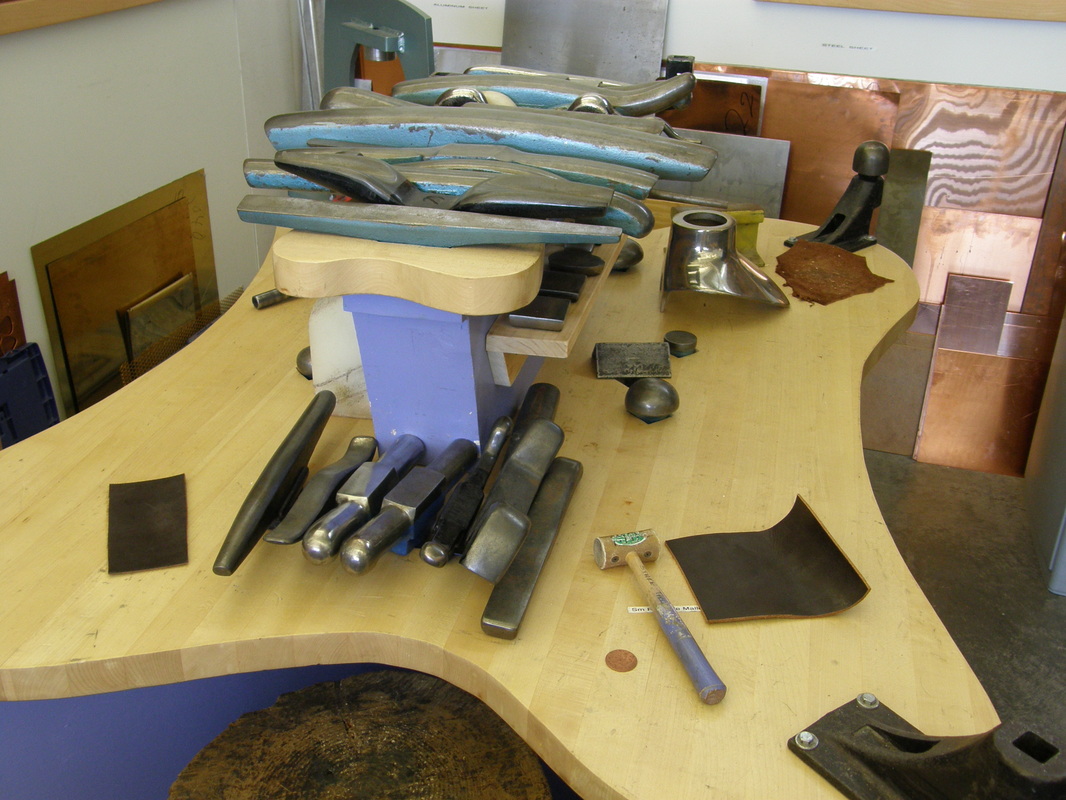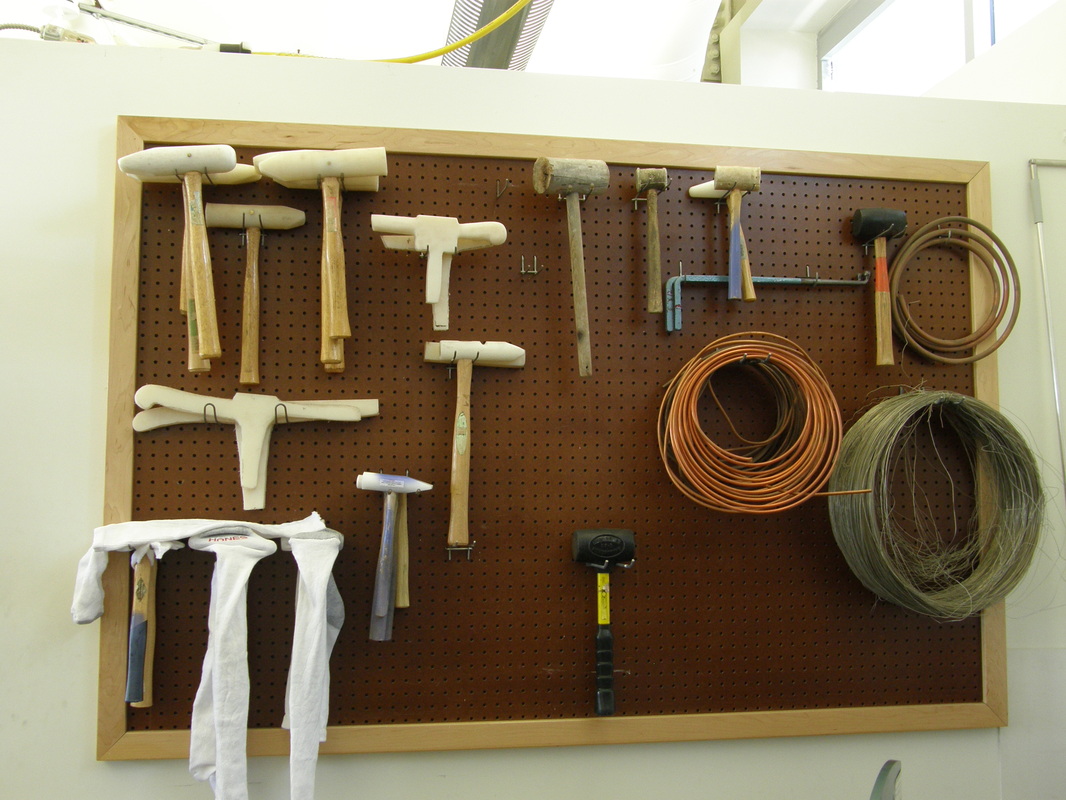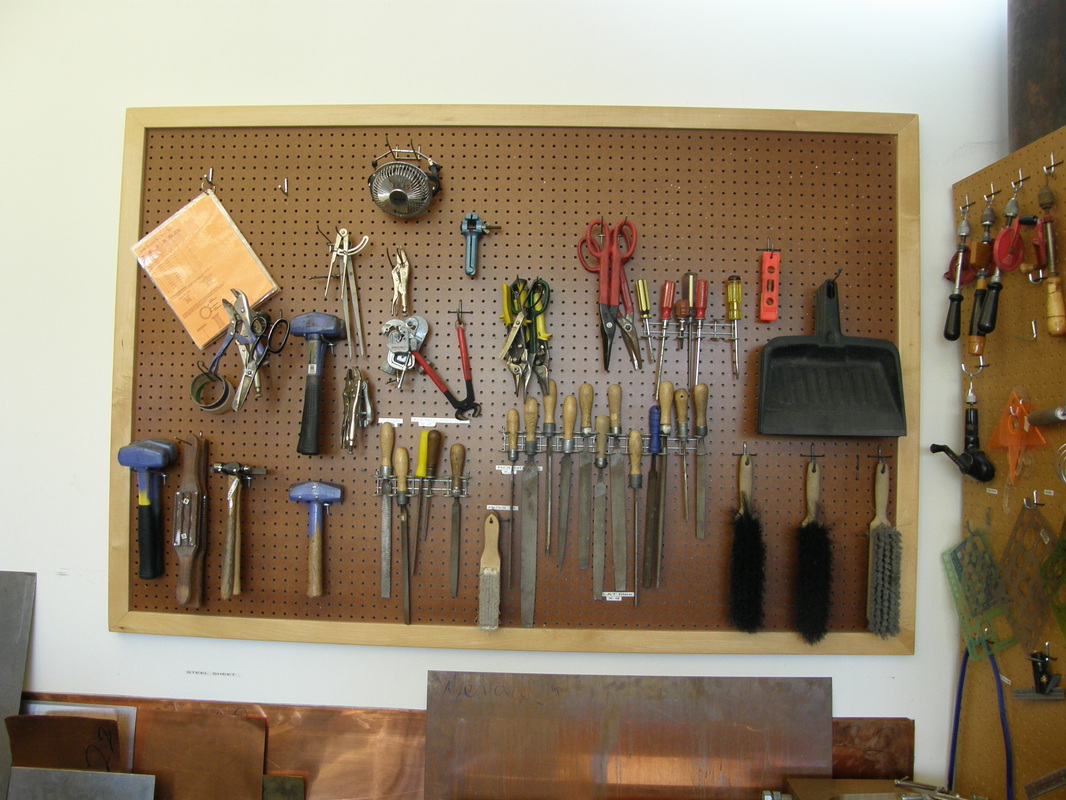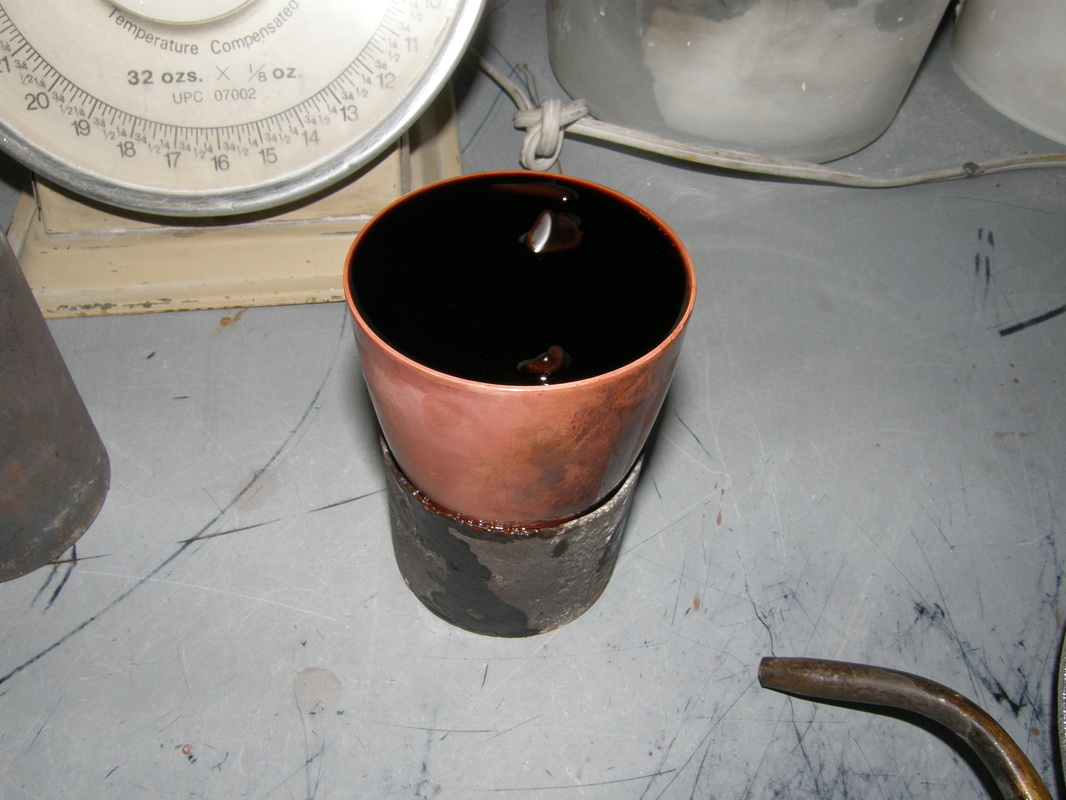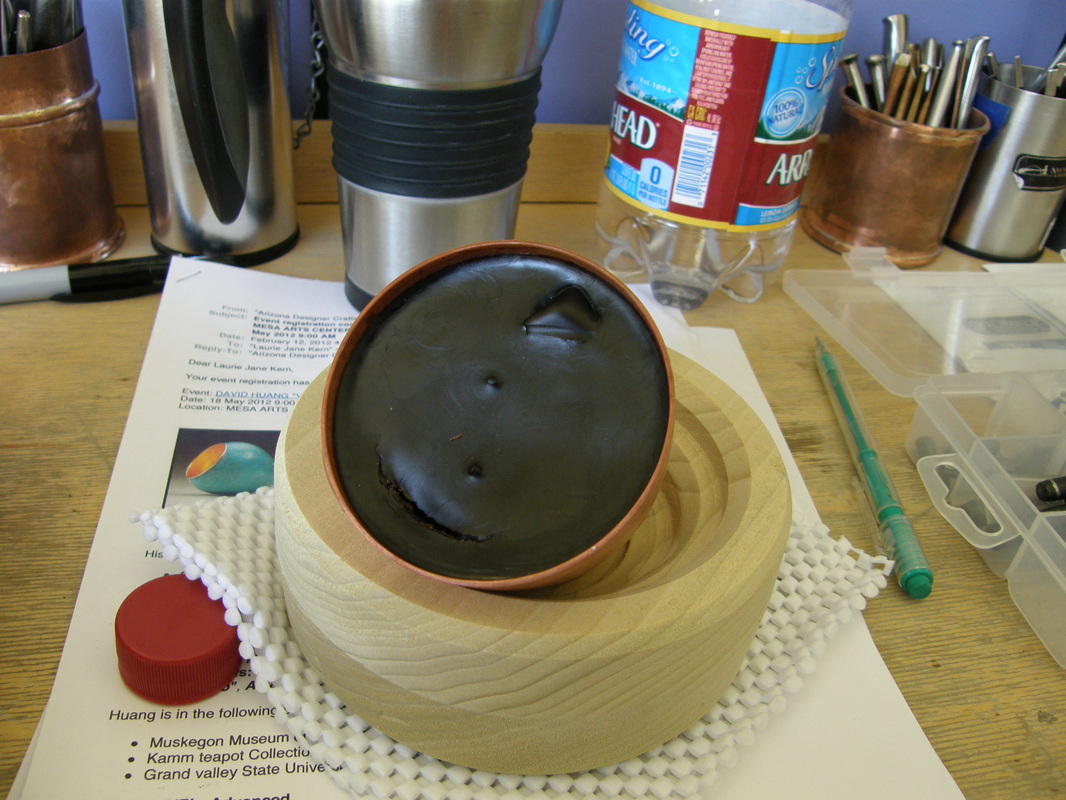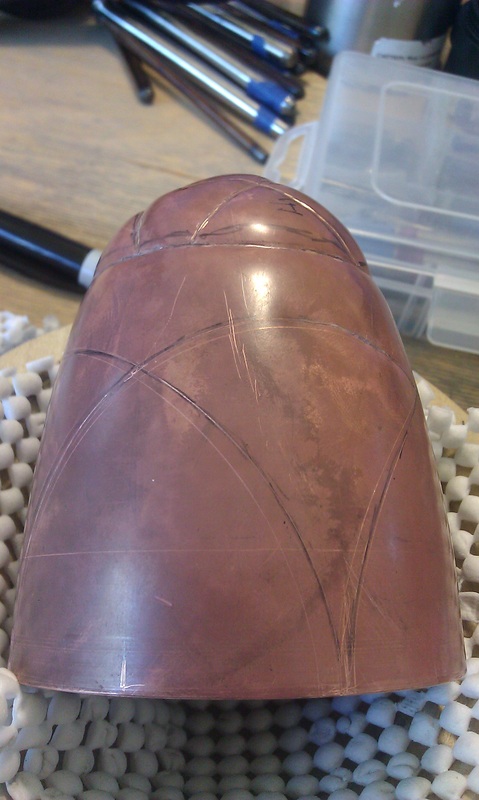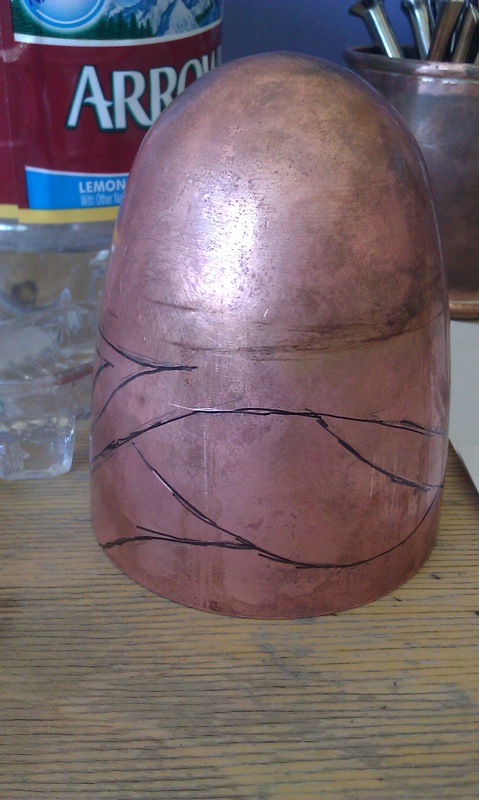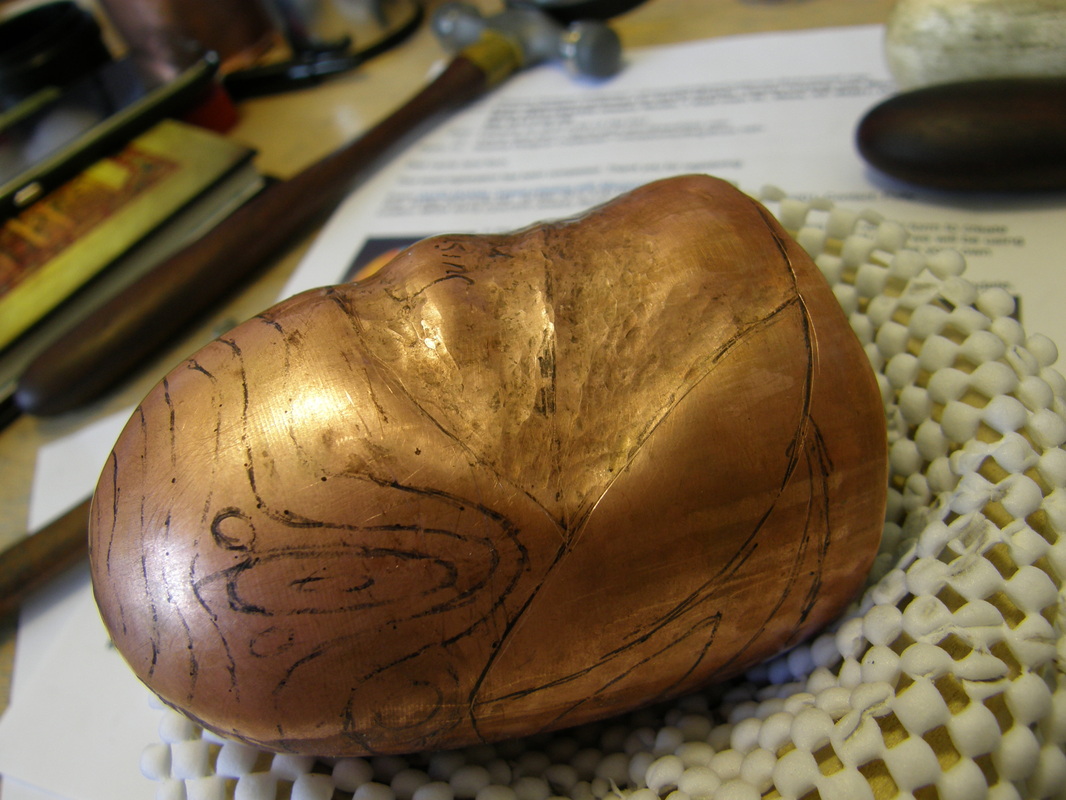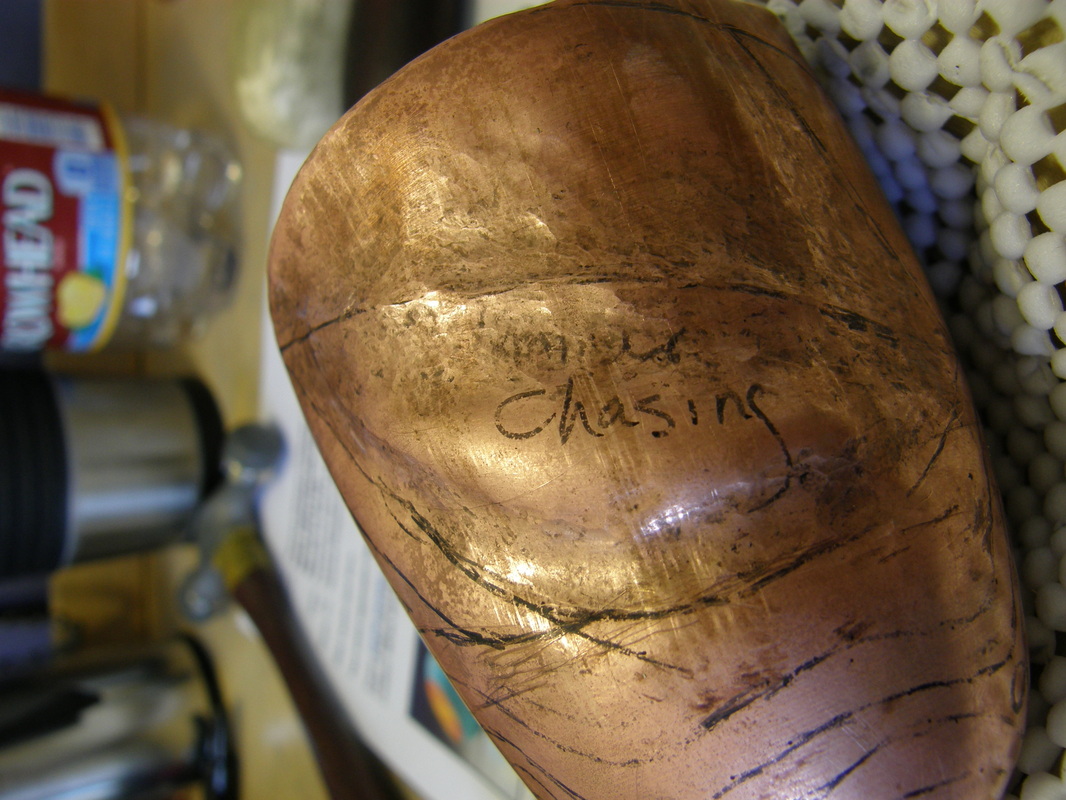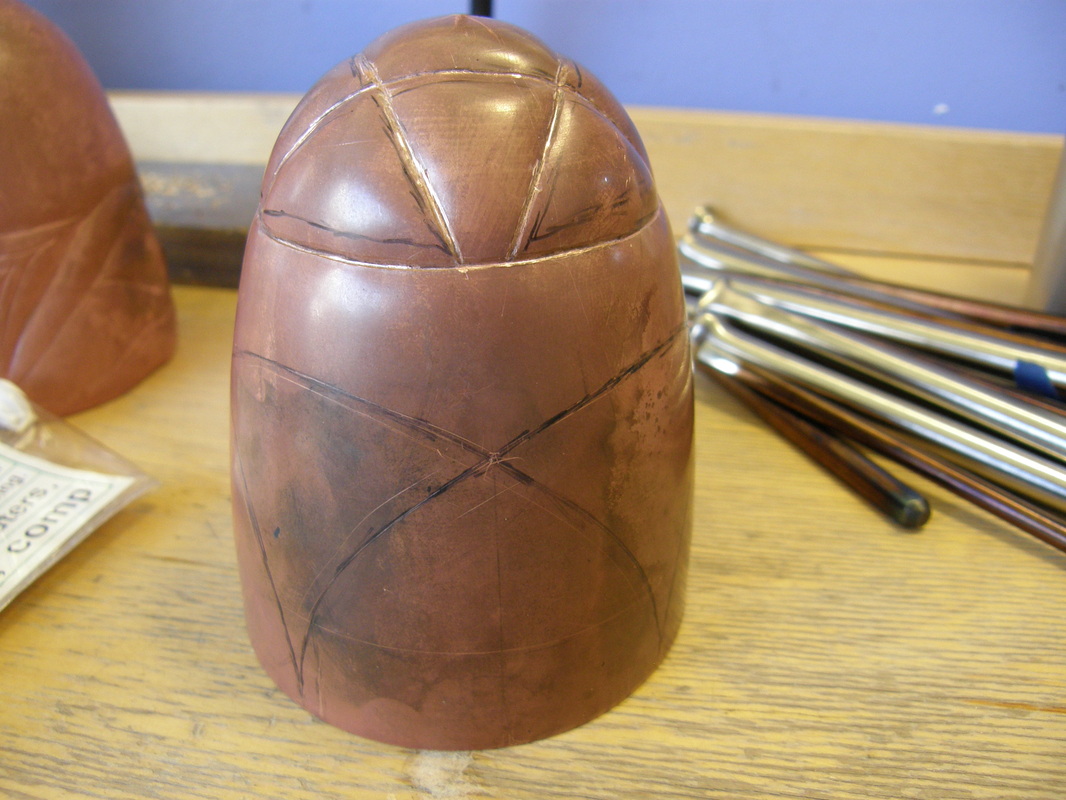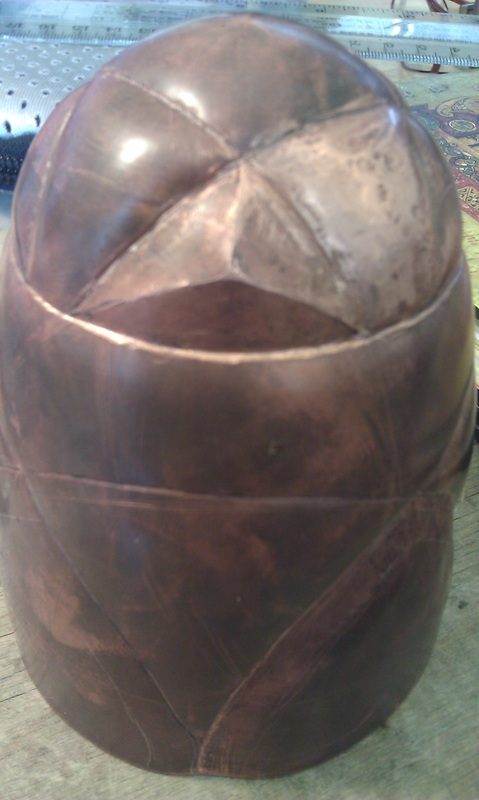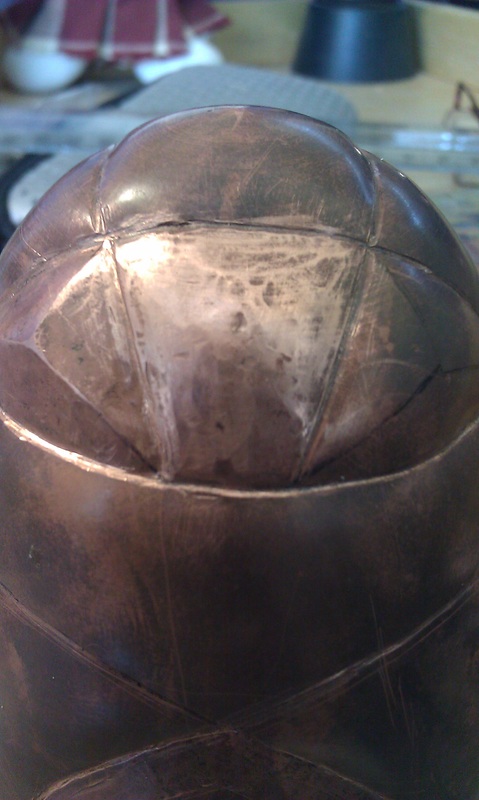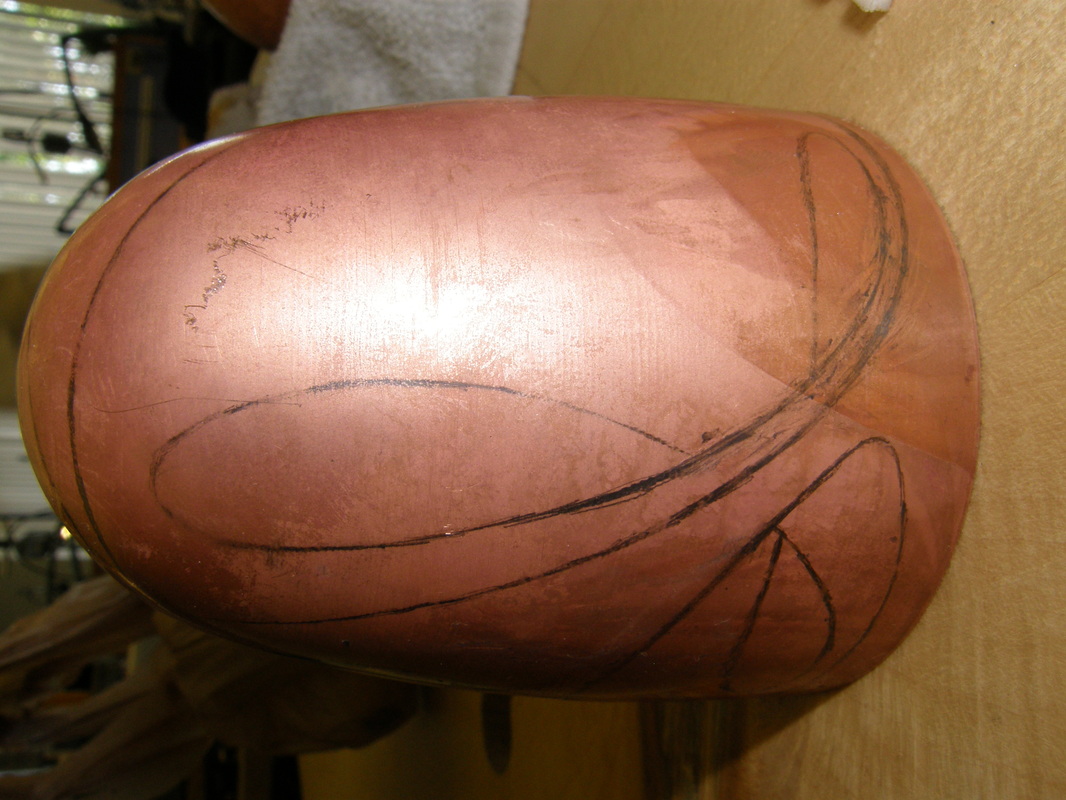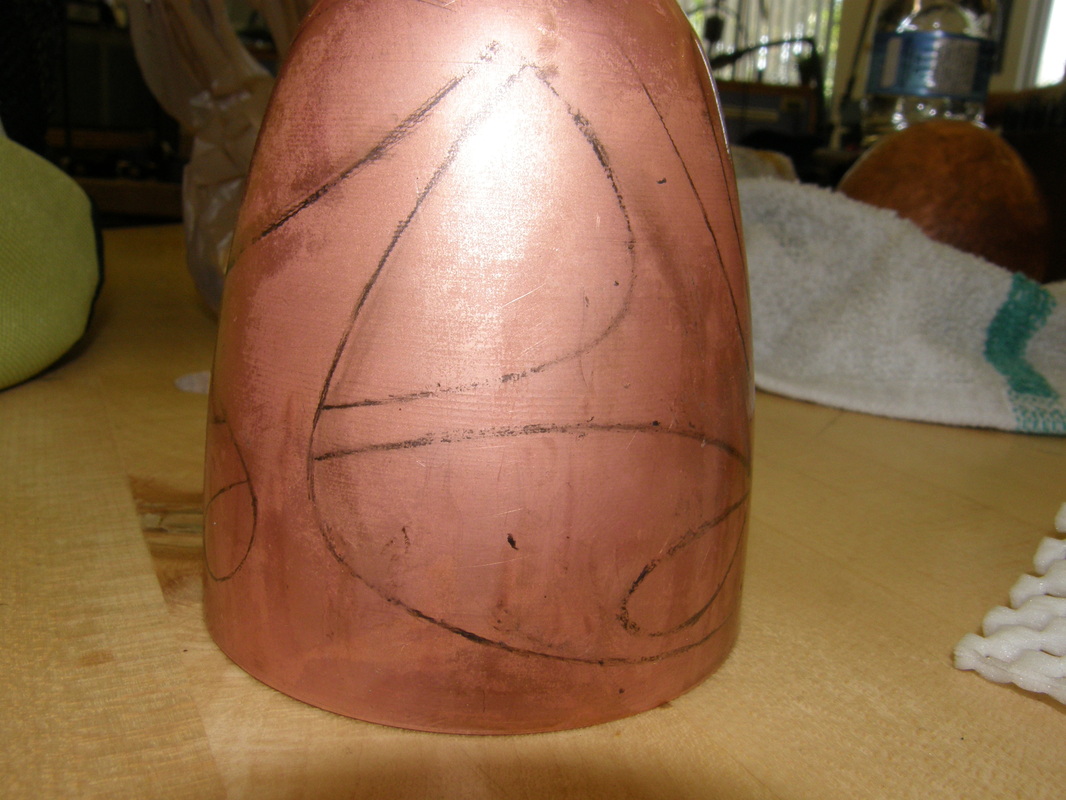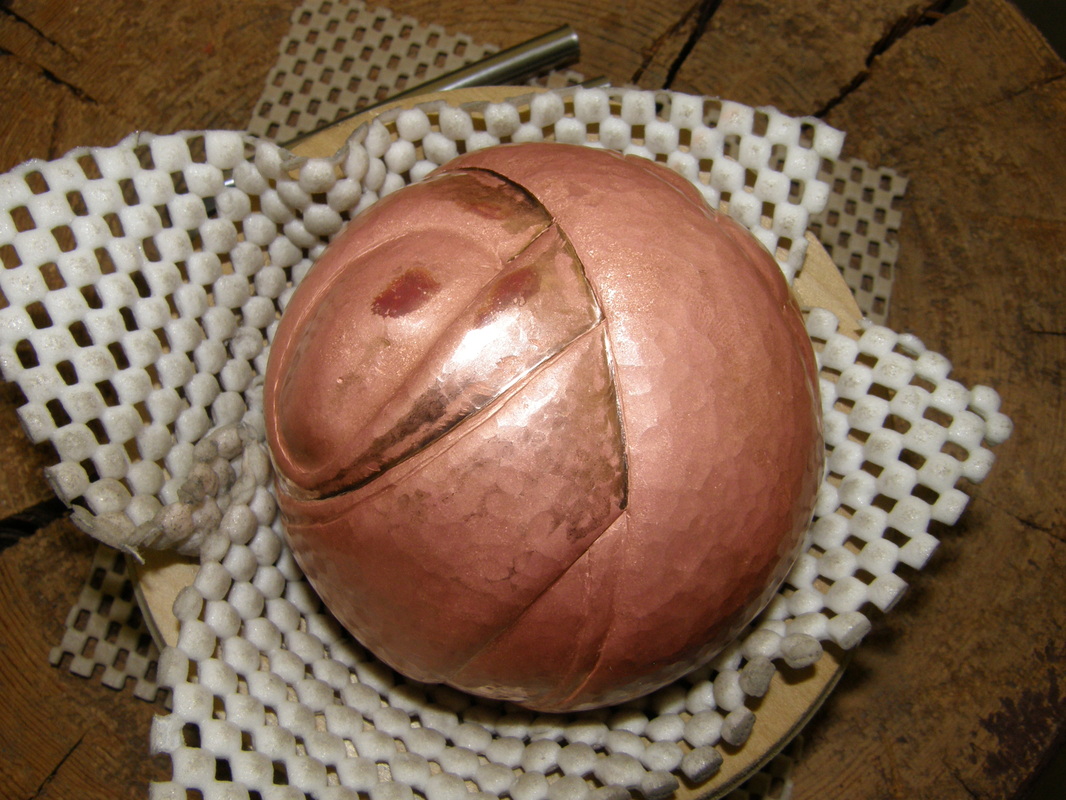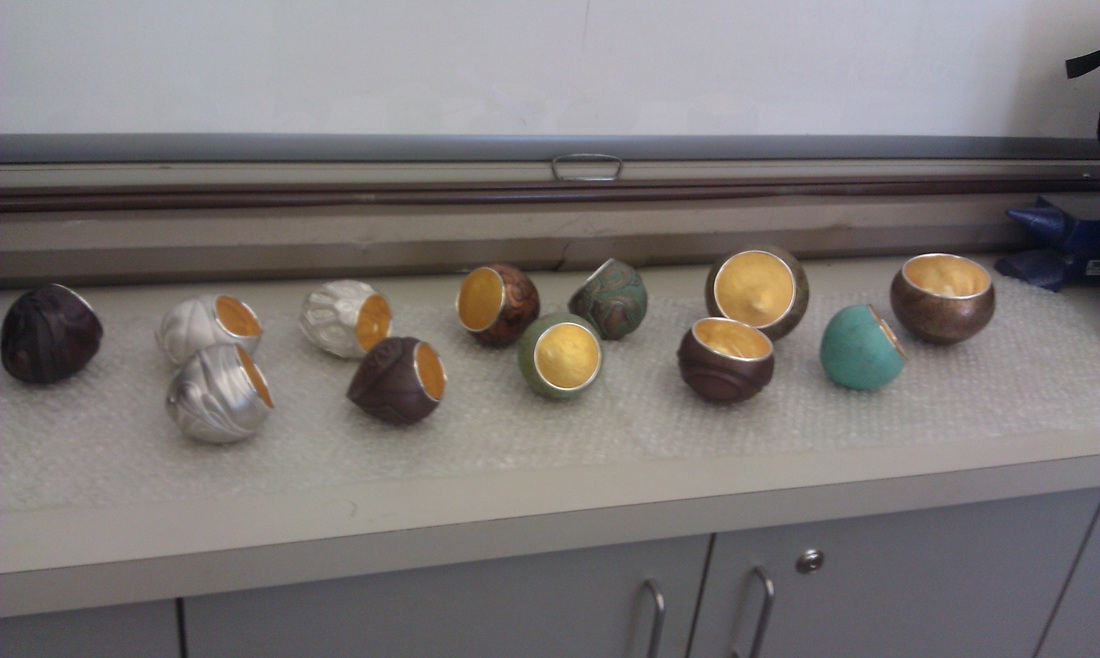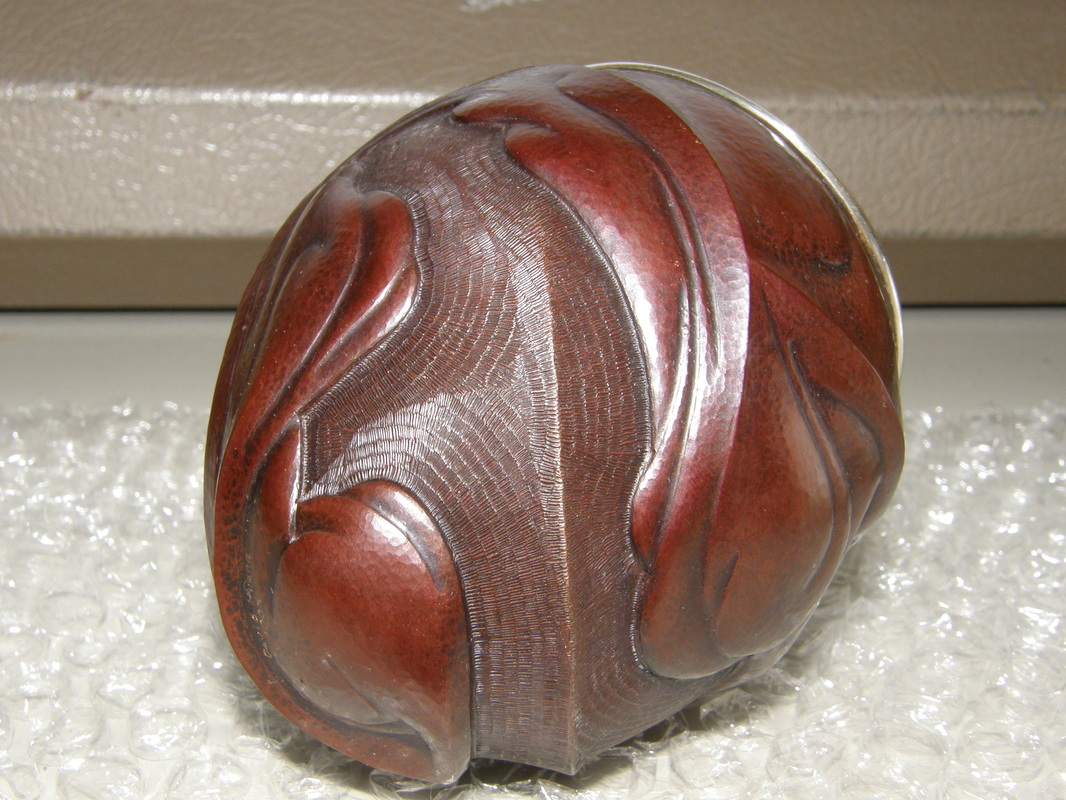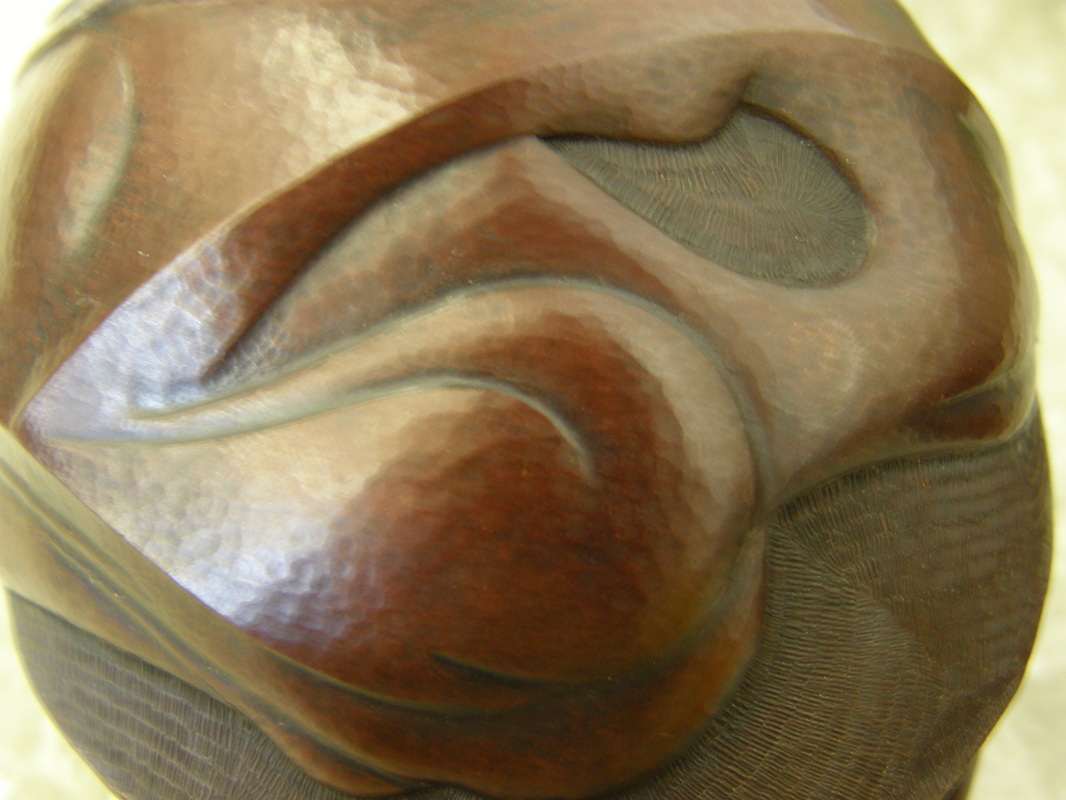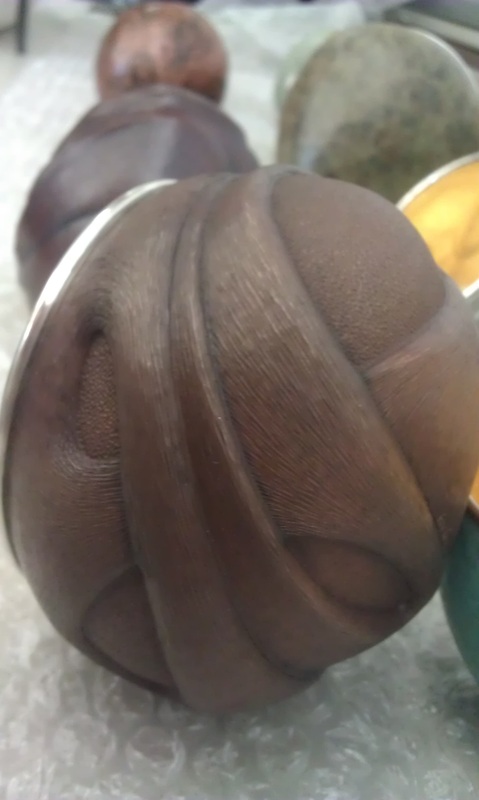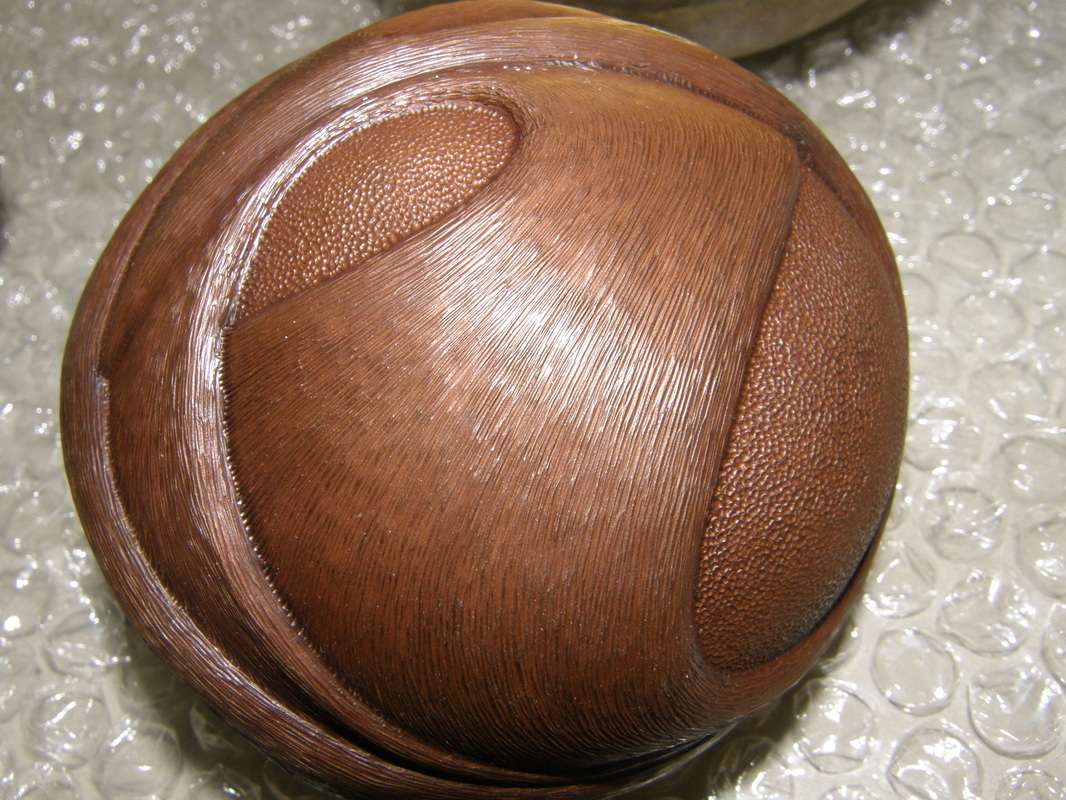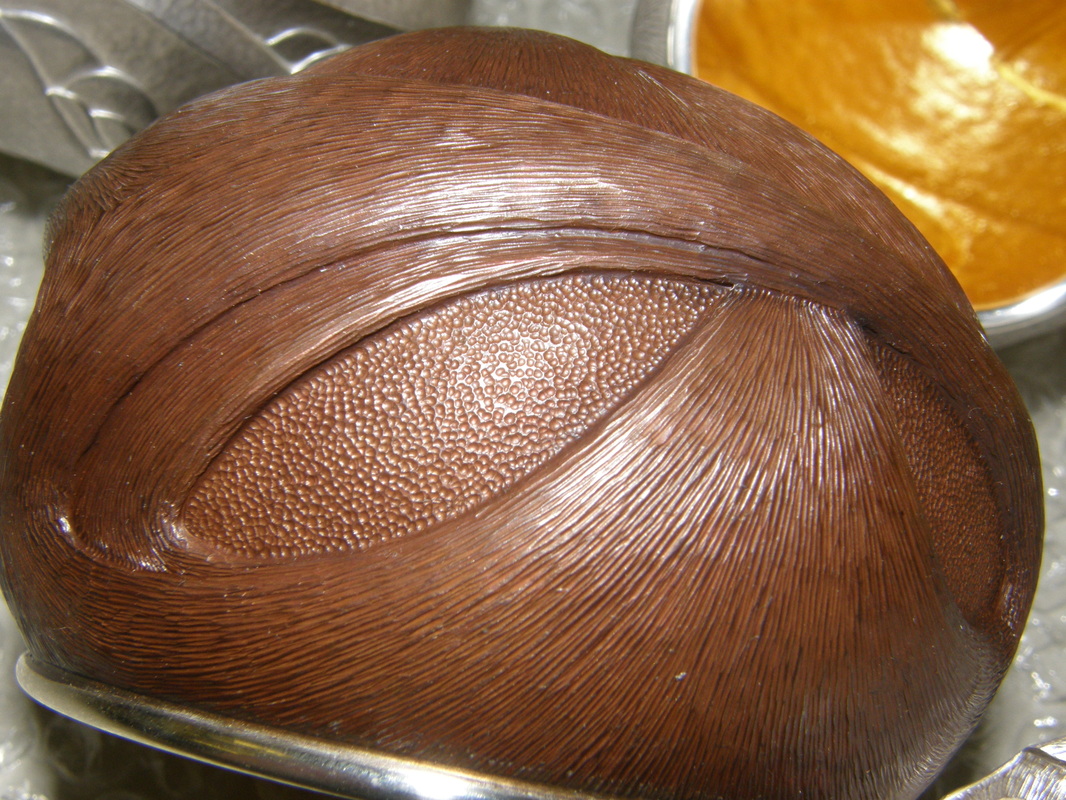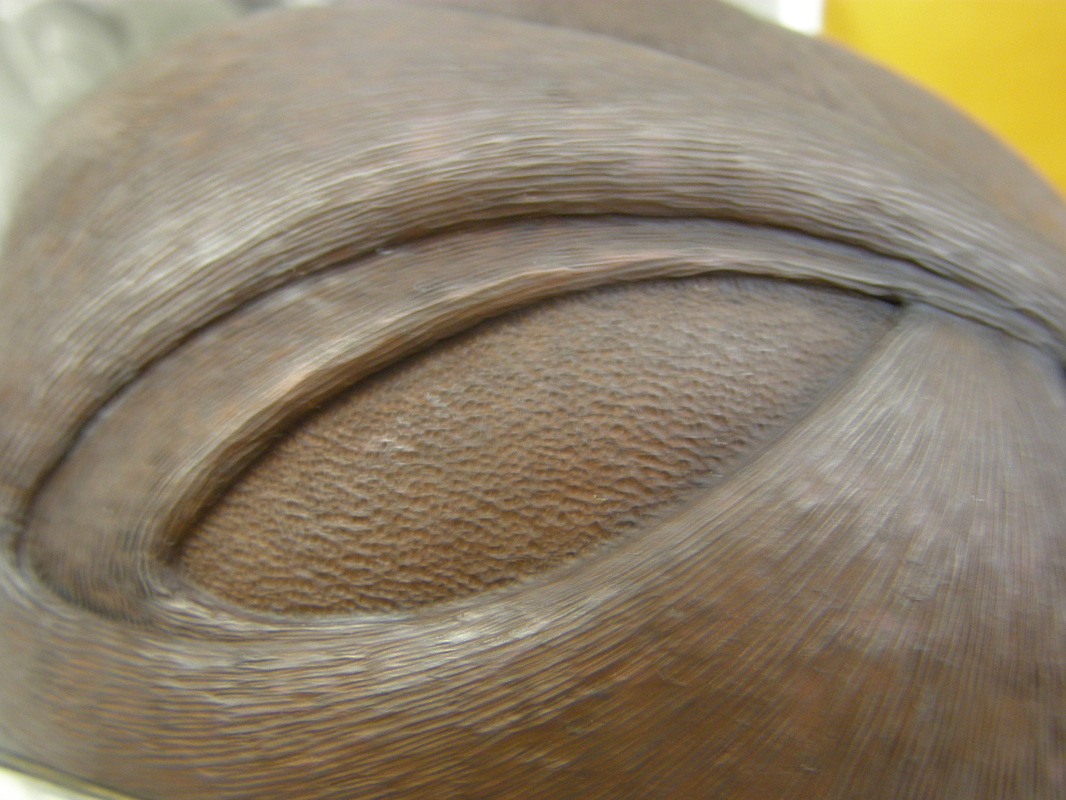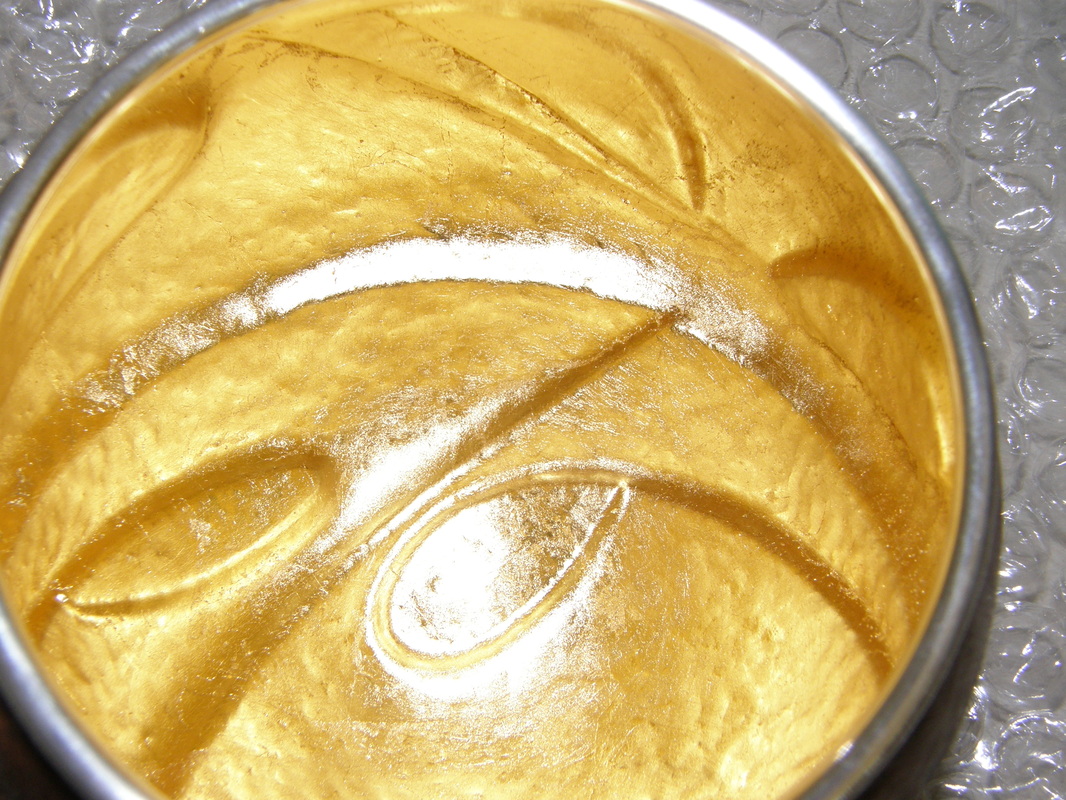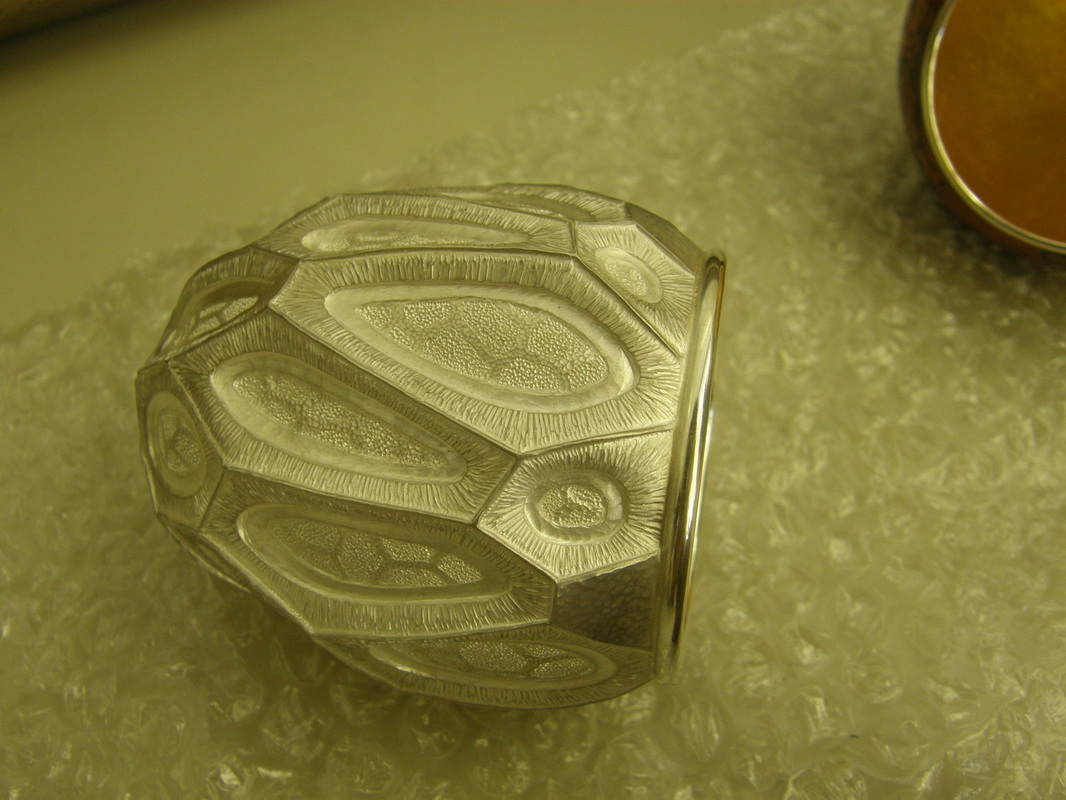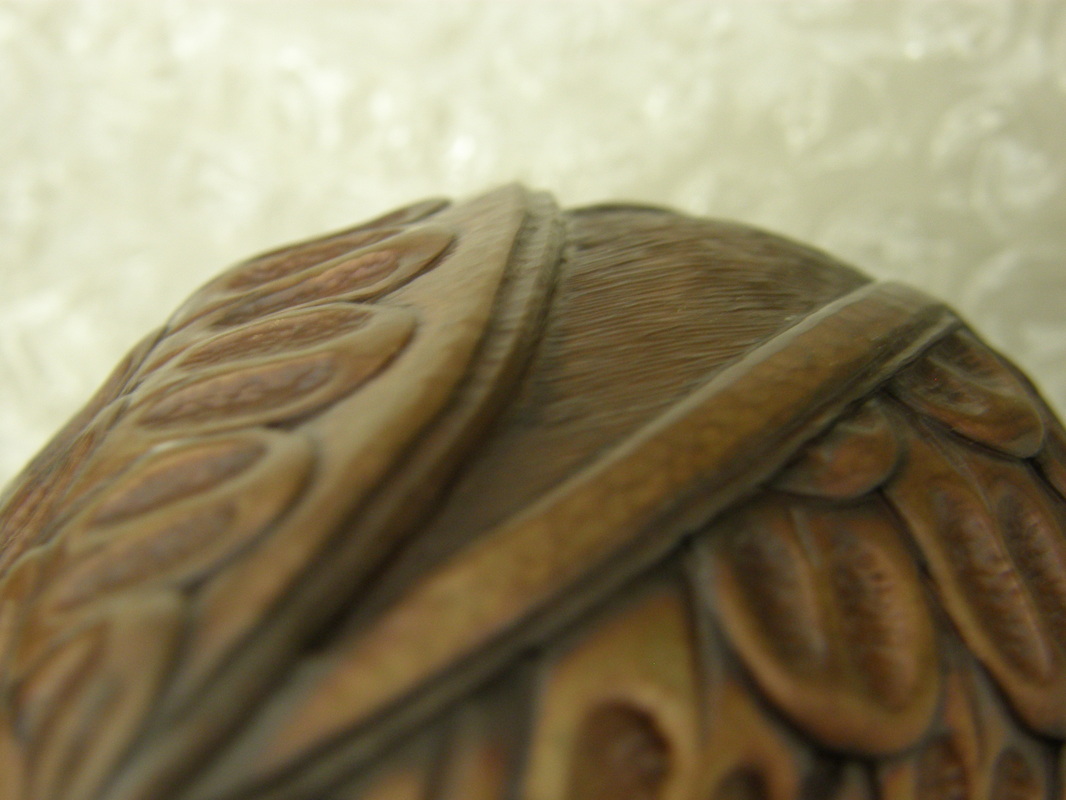
Here are some pictures of the visit.
|
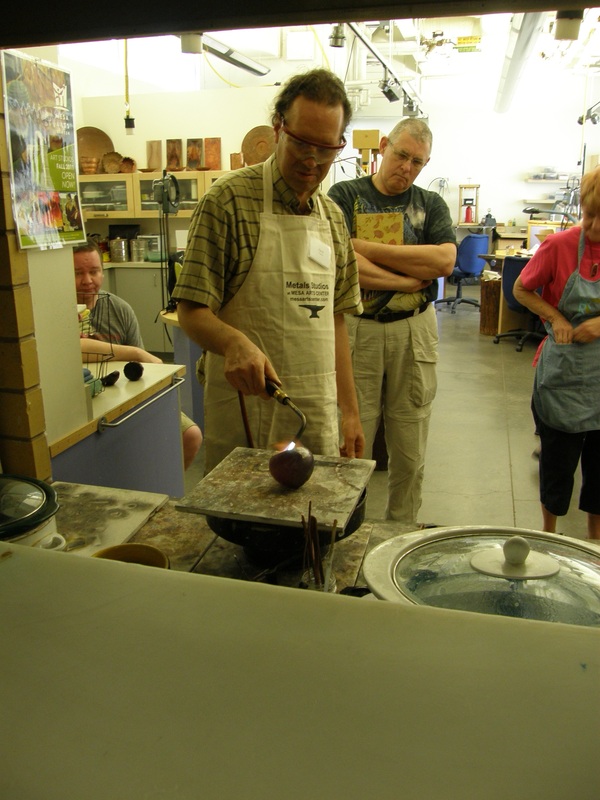
I took another road trip to Texas and on the way back, the shop elf and I stopped at Potter USA. I got a new 12" shear and then spent time talking to Kevin about a jig I want for me and to sell. After that Kevin, Danielle, the shop elf and I just talked about stuff for three hours. During this time the shop elf discovered that his flashlight addiction has a name flashaholics - and that Kevin has it too. Danielle and I just rolled our eyes and did a bit of giggling at the two of them going on about water cooled flashlights. Here are some pictures of the visit.
0 Comments
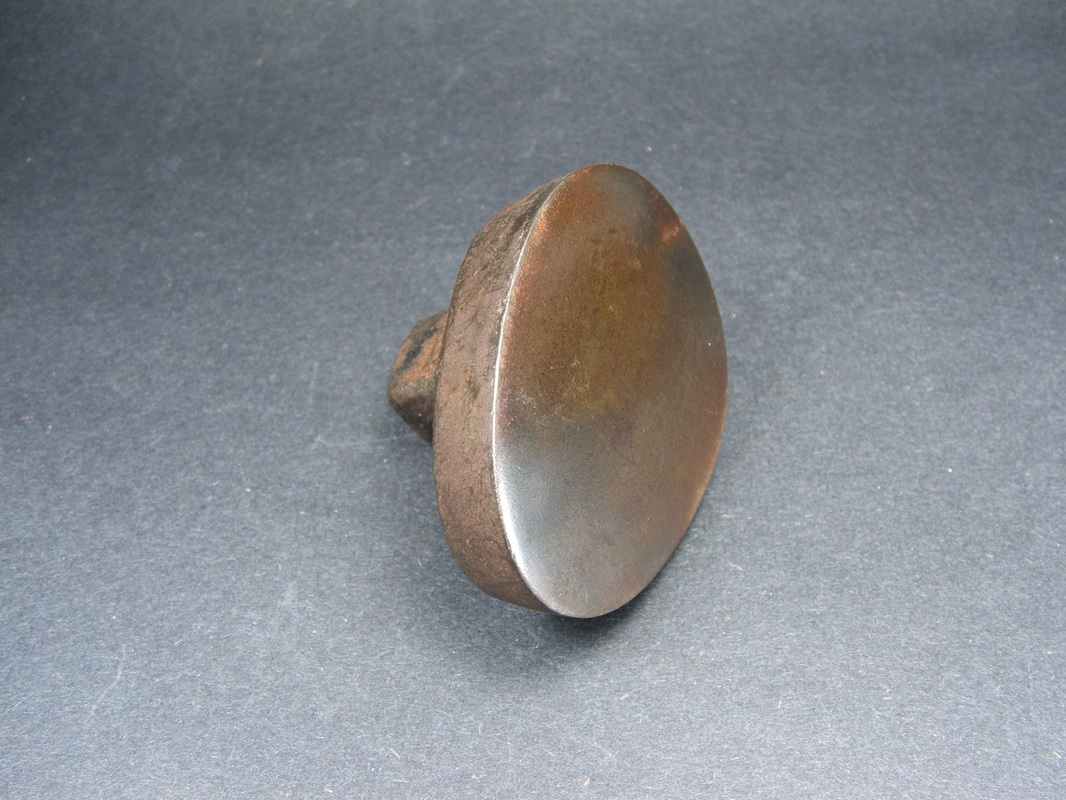
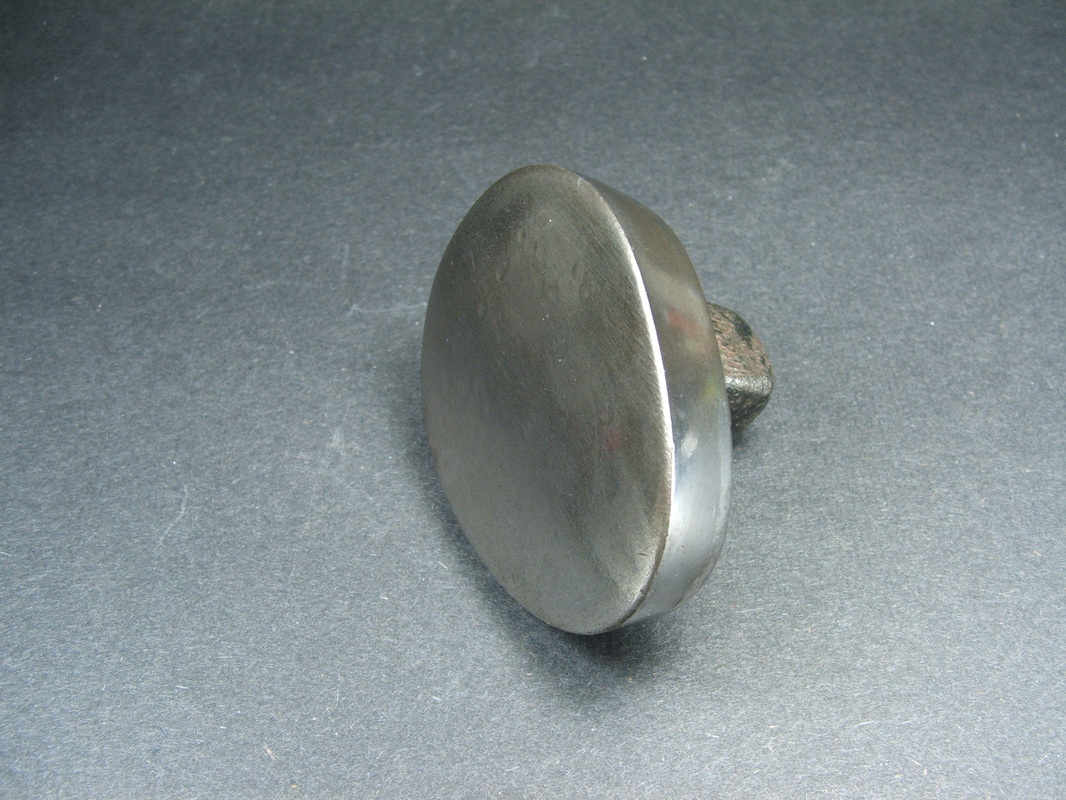
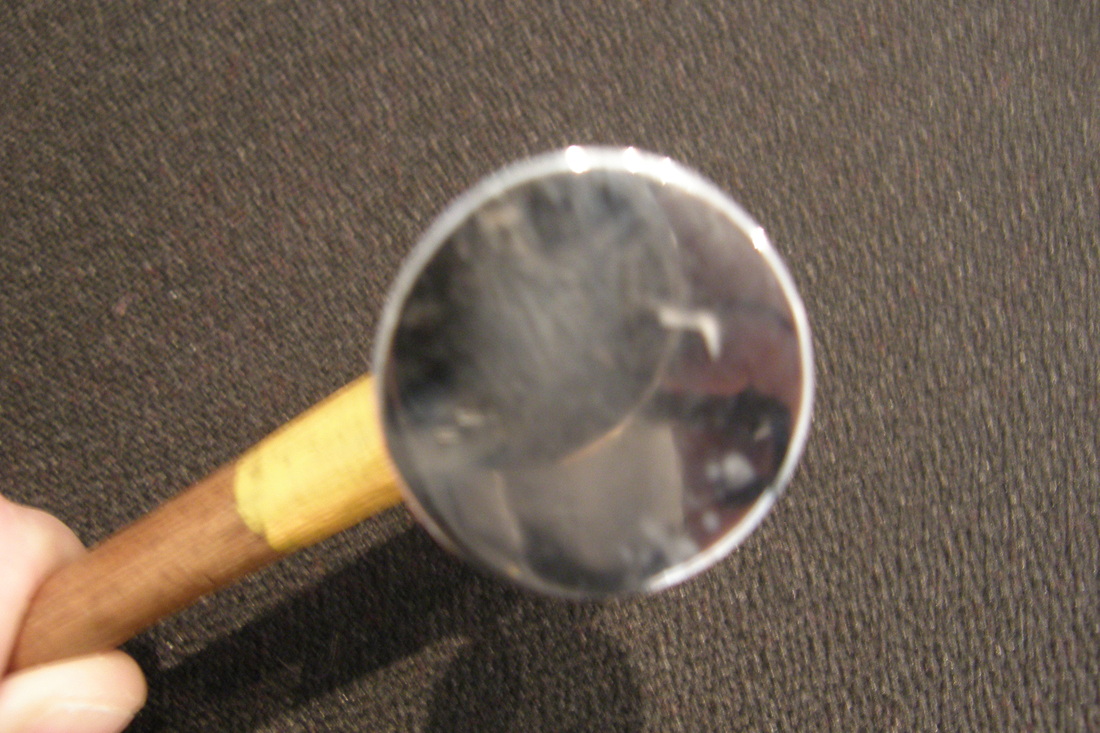
Planishing is the process of smoothing or flattening of metal. And with raising or sinking of holloware or other hollow forms - and that can include some jewelry; a traditional silversmith will use a highly polished hammer. The hammer can be flat, with softened edges for working on synclastic curved pieces thus preventing the edges from "dinging" the surface. On flat work, usually the hammer face has a slight dome to it thus keeping the edges, again, from dinging the surface.
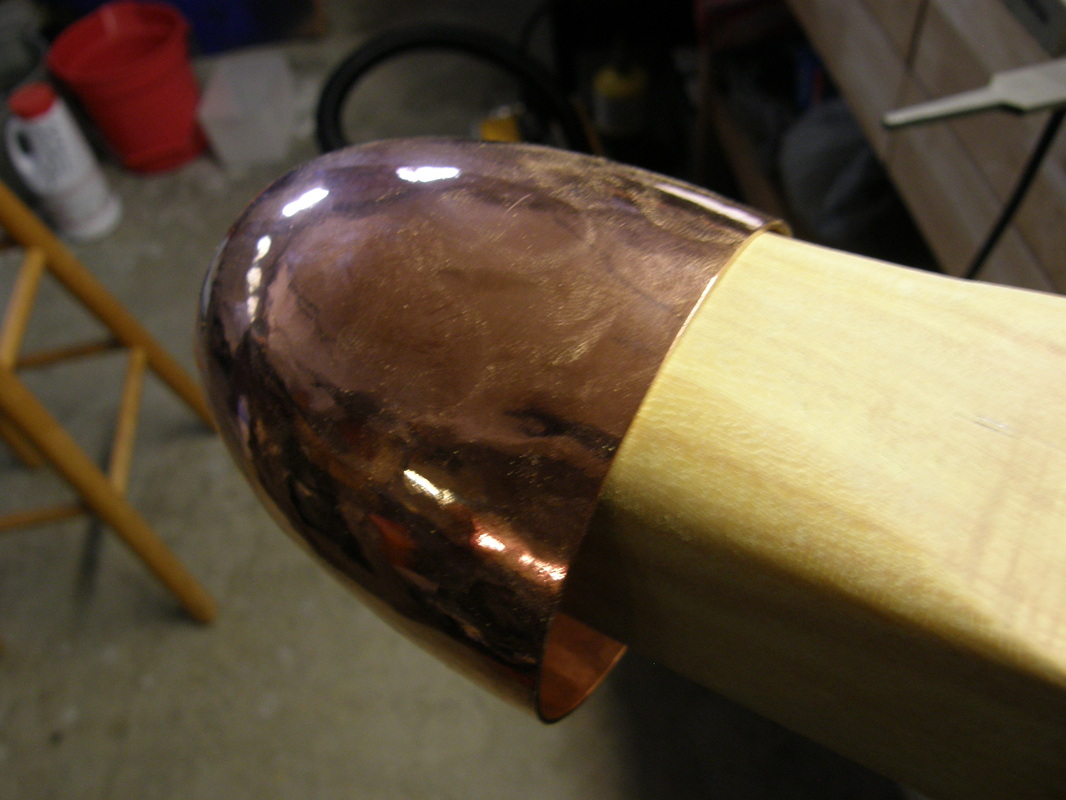
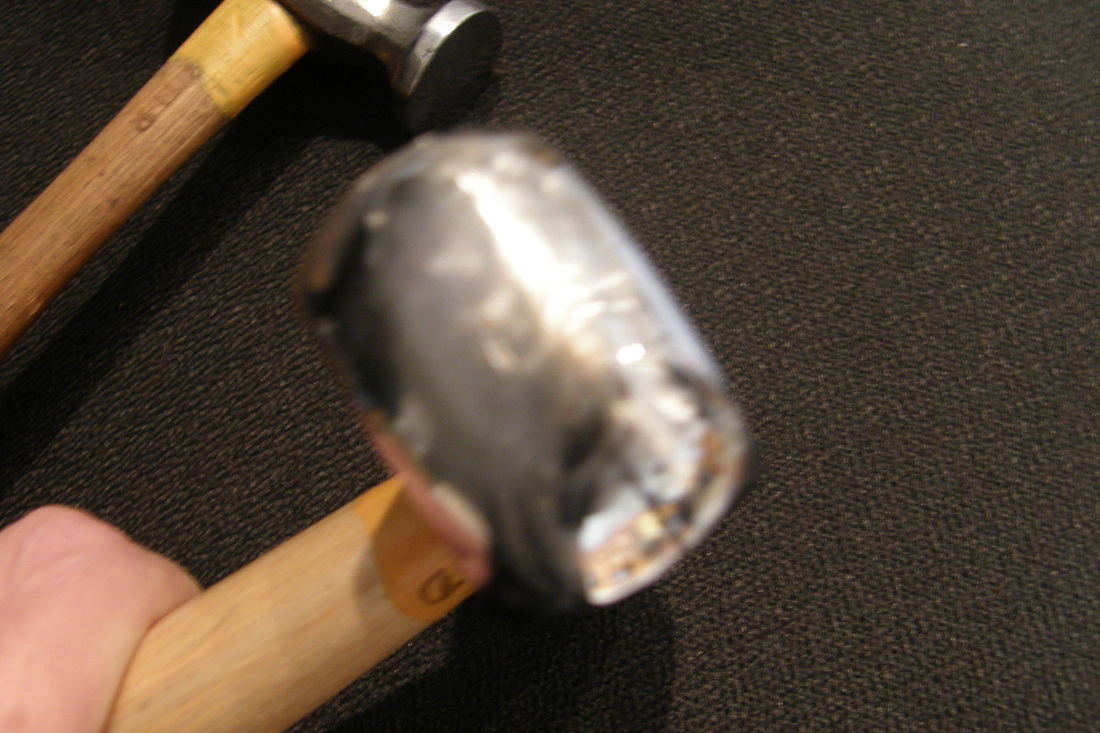
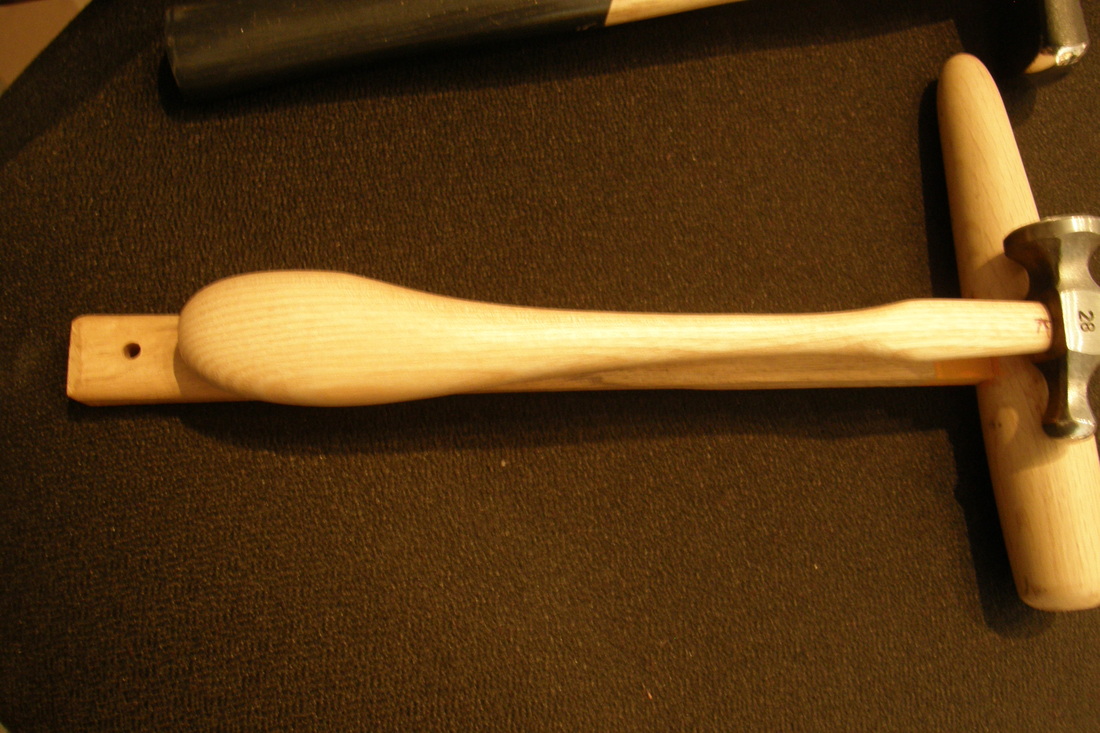
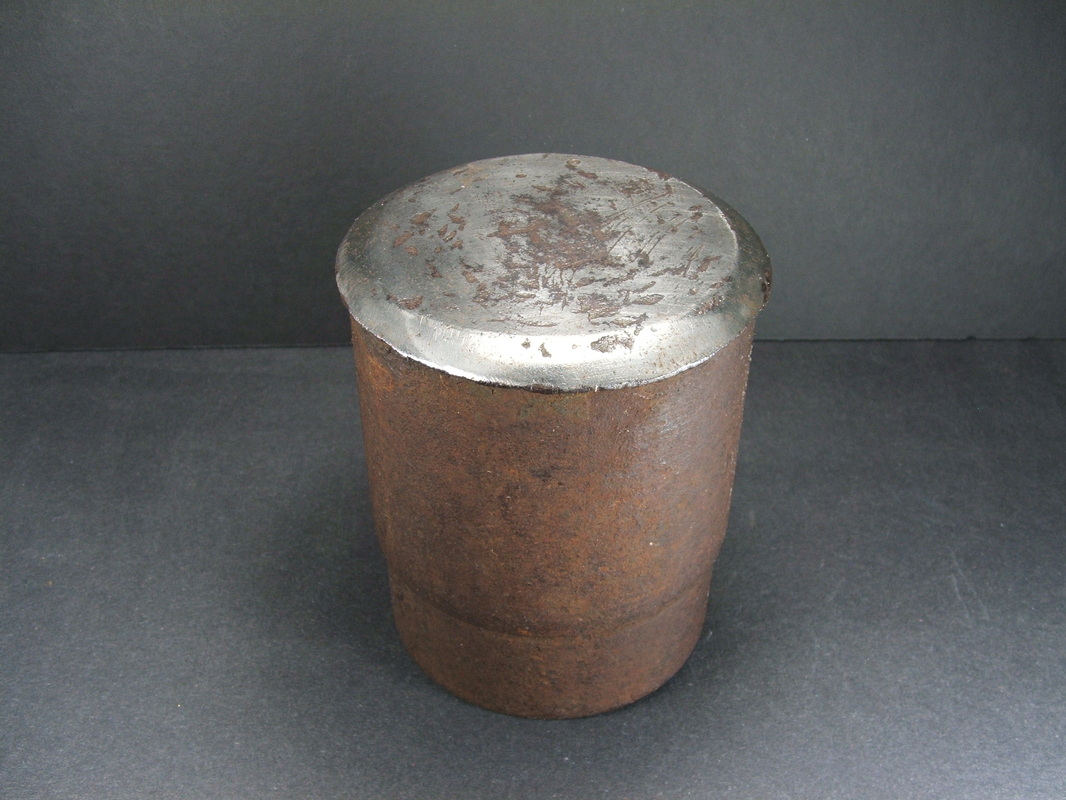
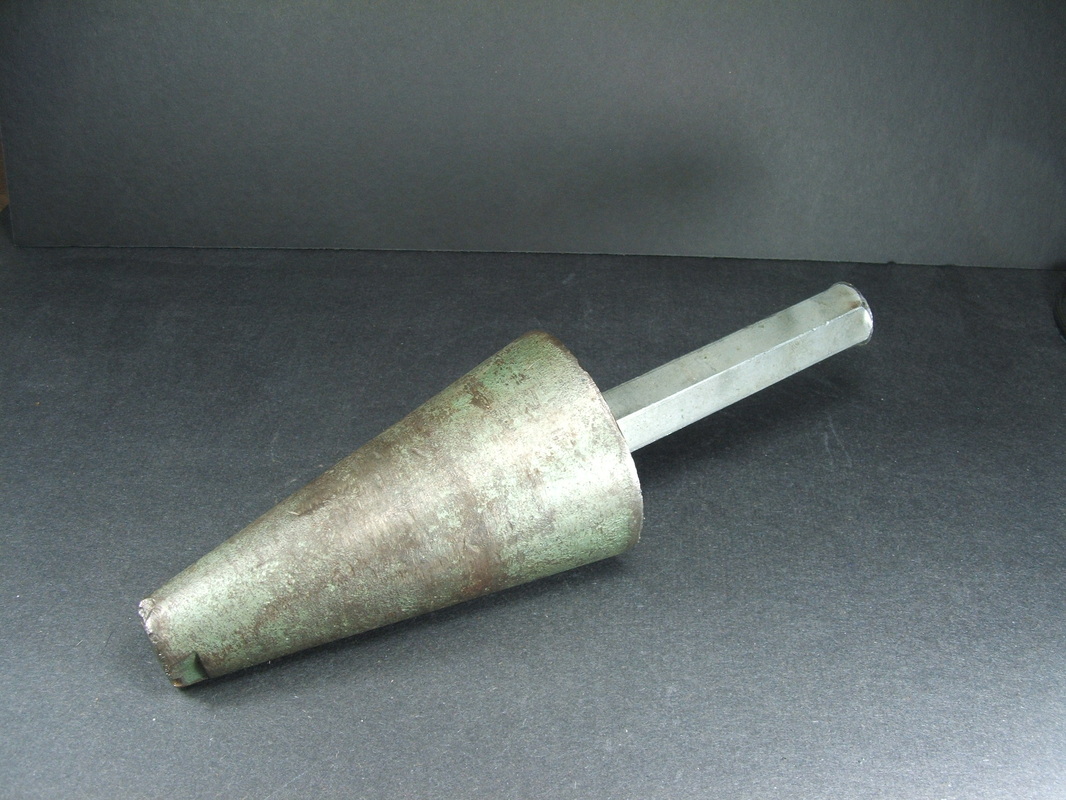
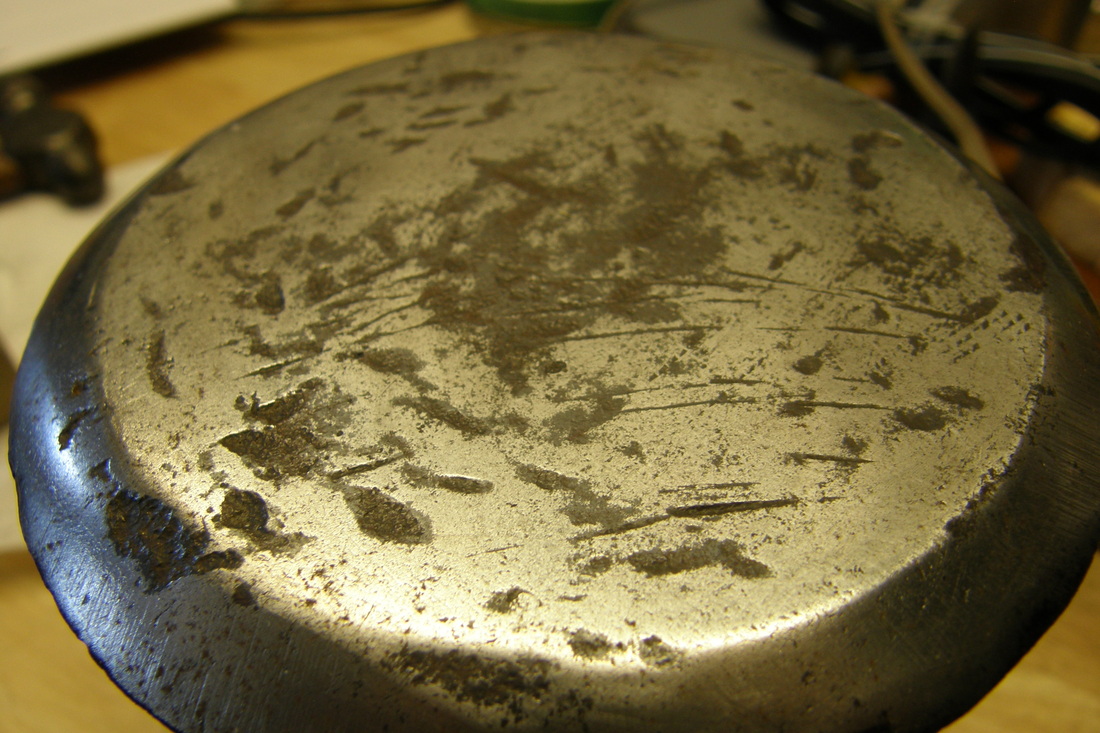
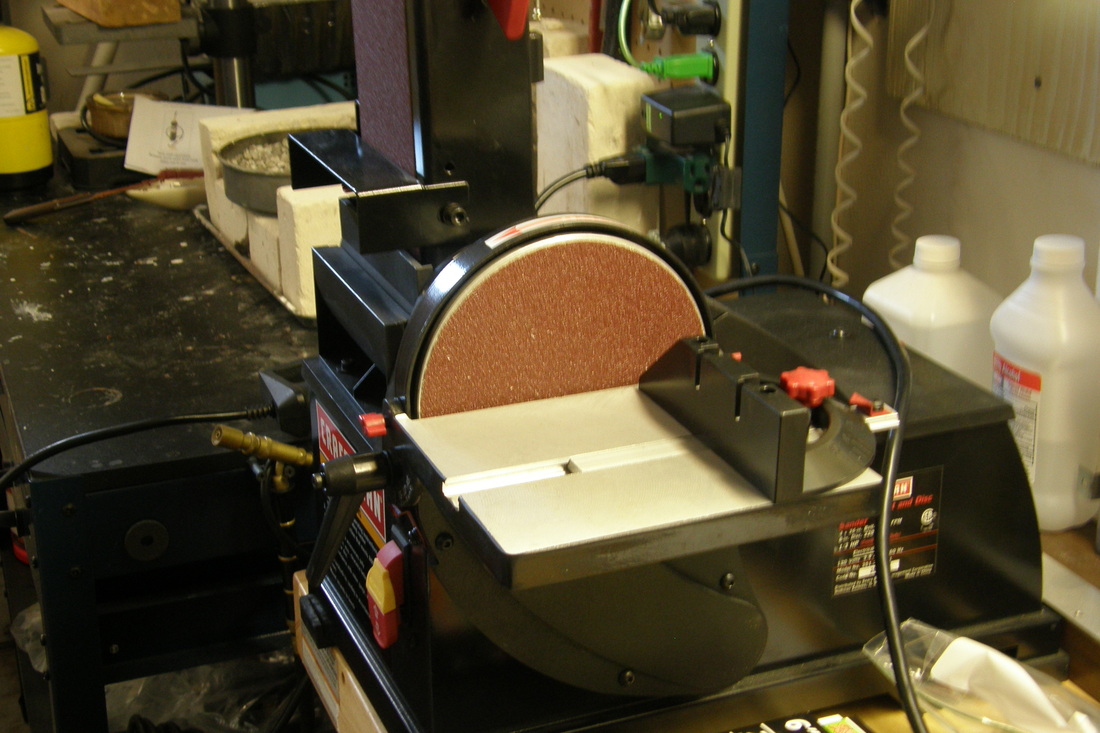
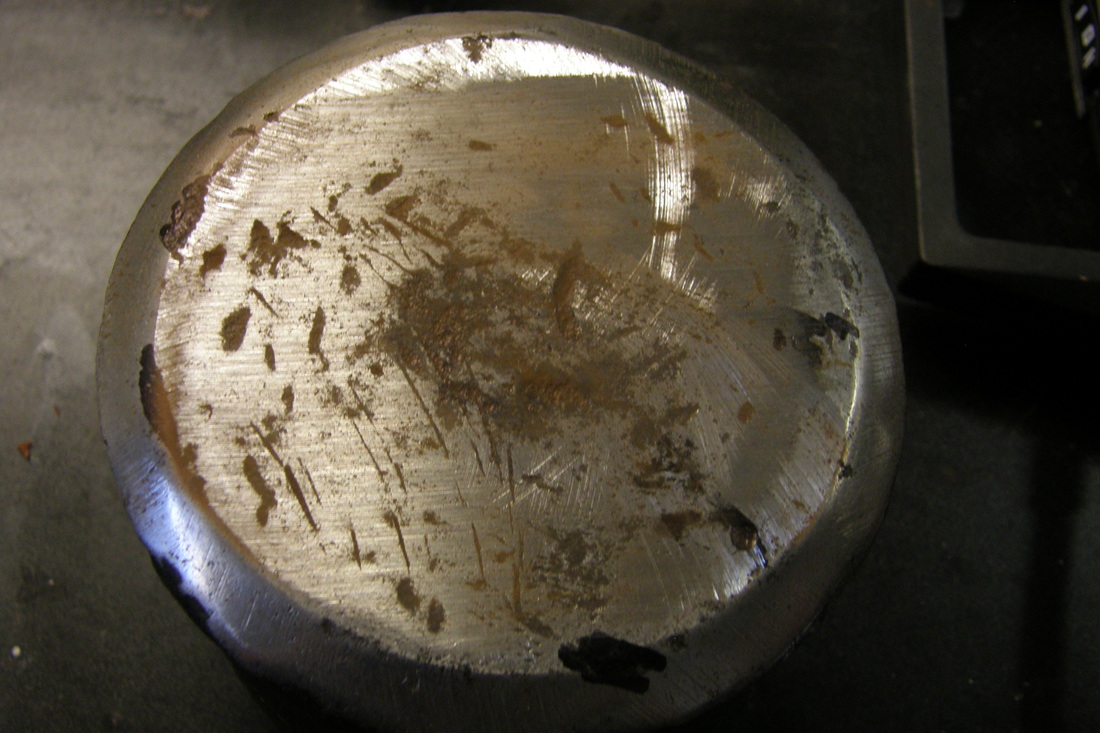
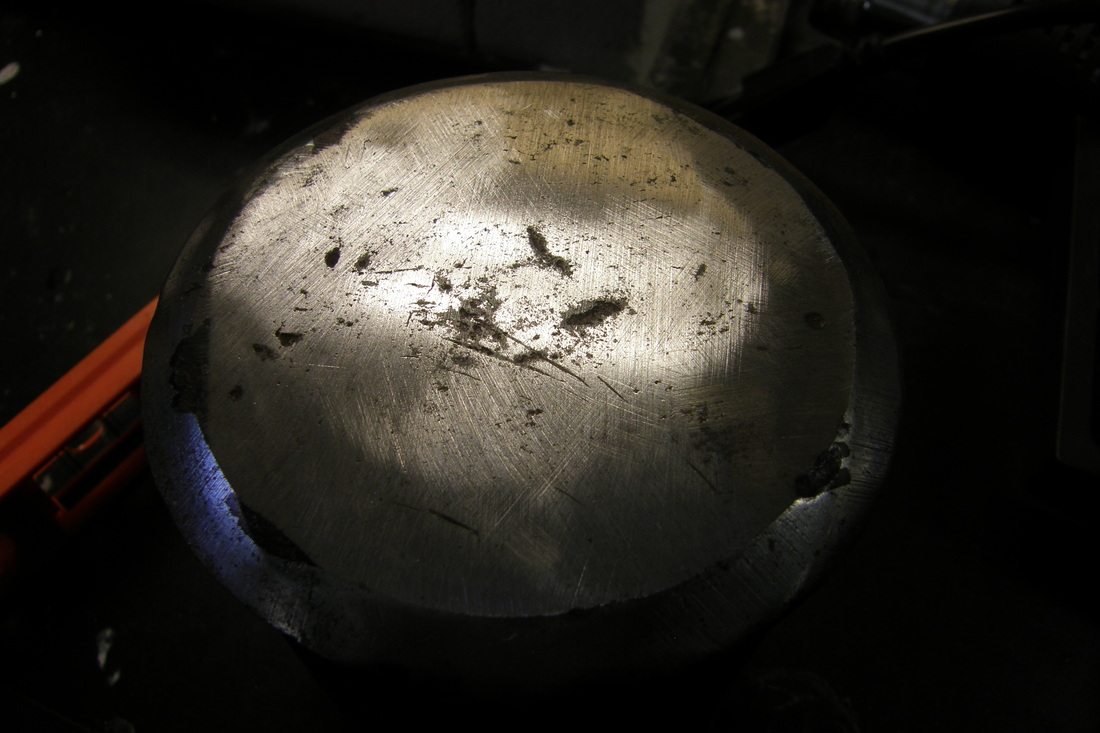
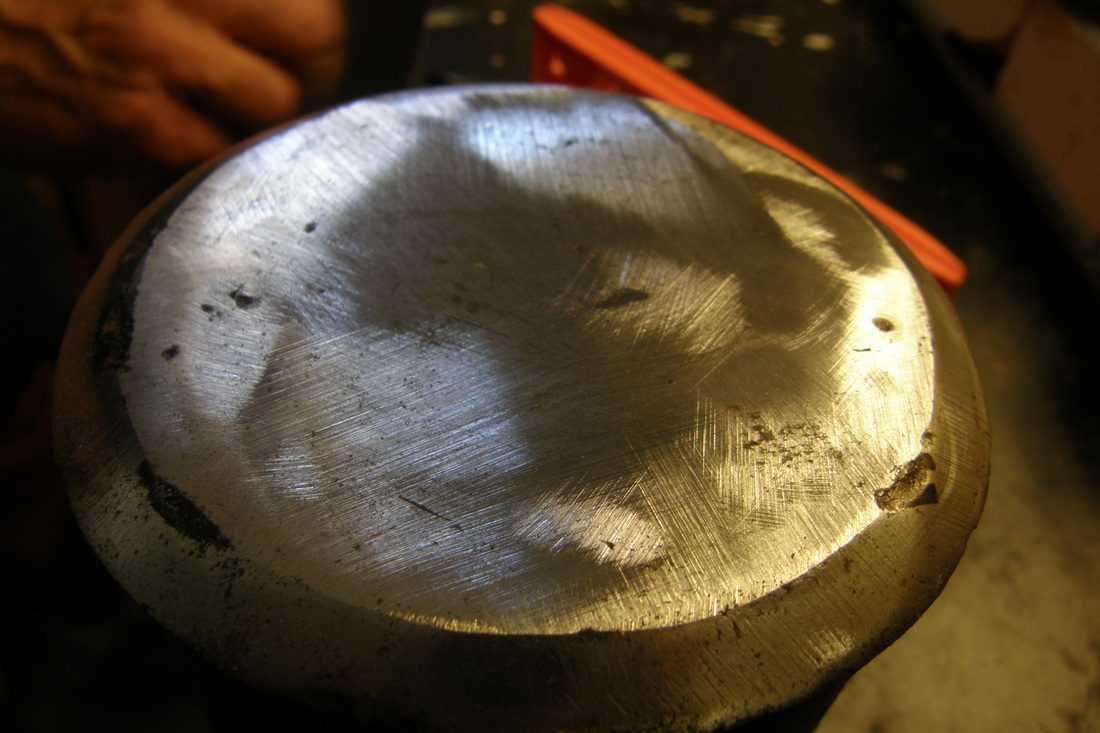
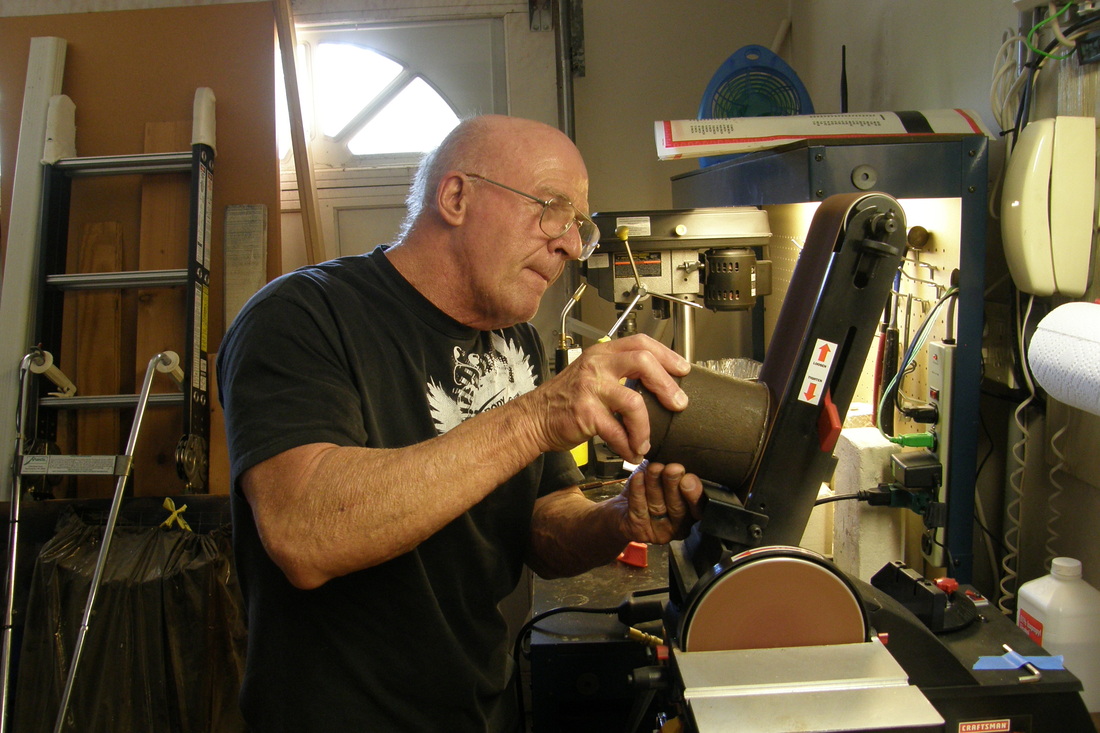
If the time and patience is taken, a very shiny and smooth surface can be obtained even before proceeding to polishing. I already have a few planishing hammers but during my workshop at Nechamkin Silver Studios, I was shown a light weight hammer and told how to make one. If you watch the little movie I made you can see it briefly. As with all the other tasks I came home with, making one was on the list. I bought the metal and a week ago I spent time in the garage with the shop elf drilling a center hole for the handle mounting. The next day, while I was at work, the shop elf was very excited and decided to mount the handle - BEFORE I had finished the faces. Yes, I know I could have knocked out the wedge and removed the handle except for the fact that the shop elf, in his eagerness also epoxied the handle in. Oh well. Today I went into the garage and with hand files, sanding belts, several grades of sand paper and finally the polishing wheels I shaped the faces. One face is flat with rounded edges and the other face is ever so slightly rounded. And while the shop elf was drilling I was shaping a cheapie nylon hammer from Harbor Freight so it could be a small raising hammer. Hey, for 12 bucks, why not??!!! So here are the process. Remember, you can click any image to open a larger version and then use the arrows to move to the next. Last week I cut my first wood stake. That stake is for the upper half of the tumbler and I did that stake first as it was the easiest to do.
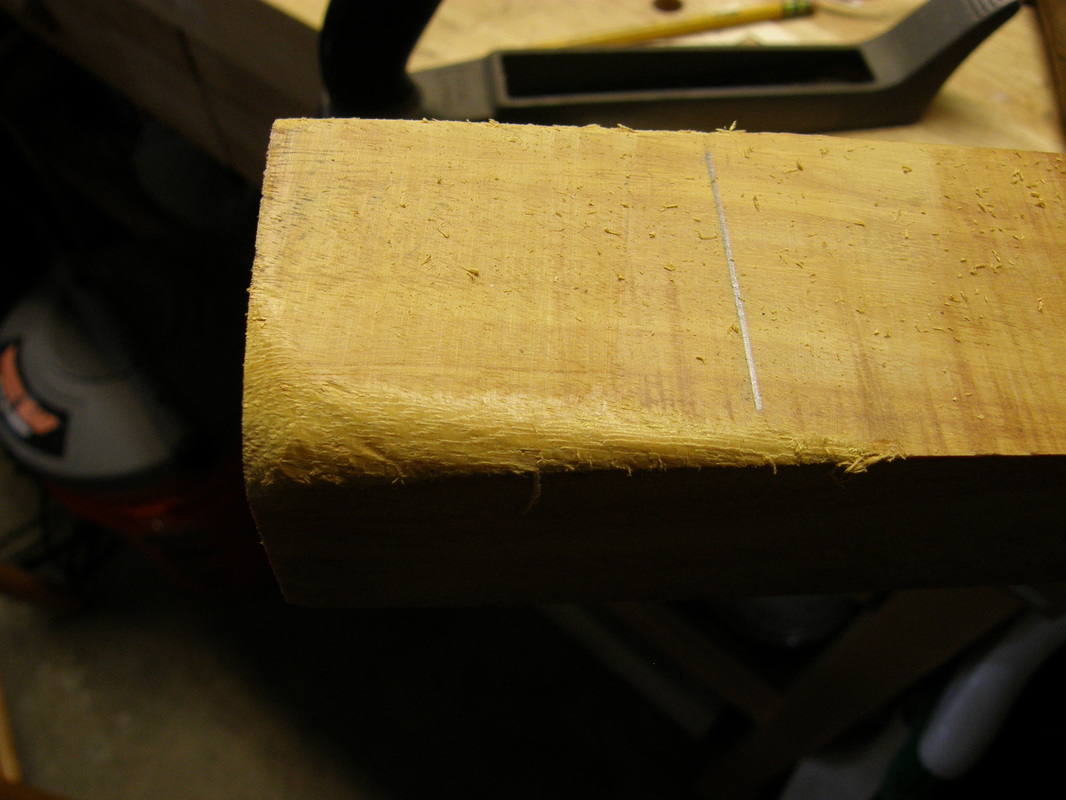
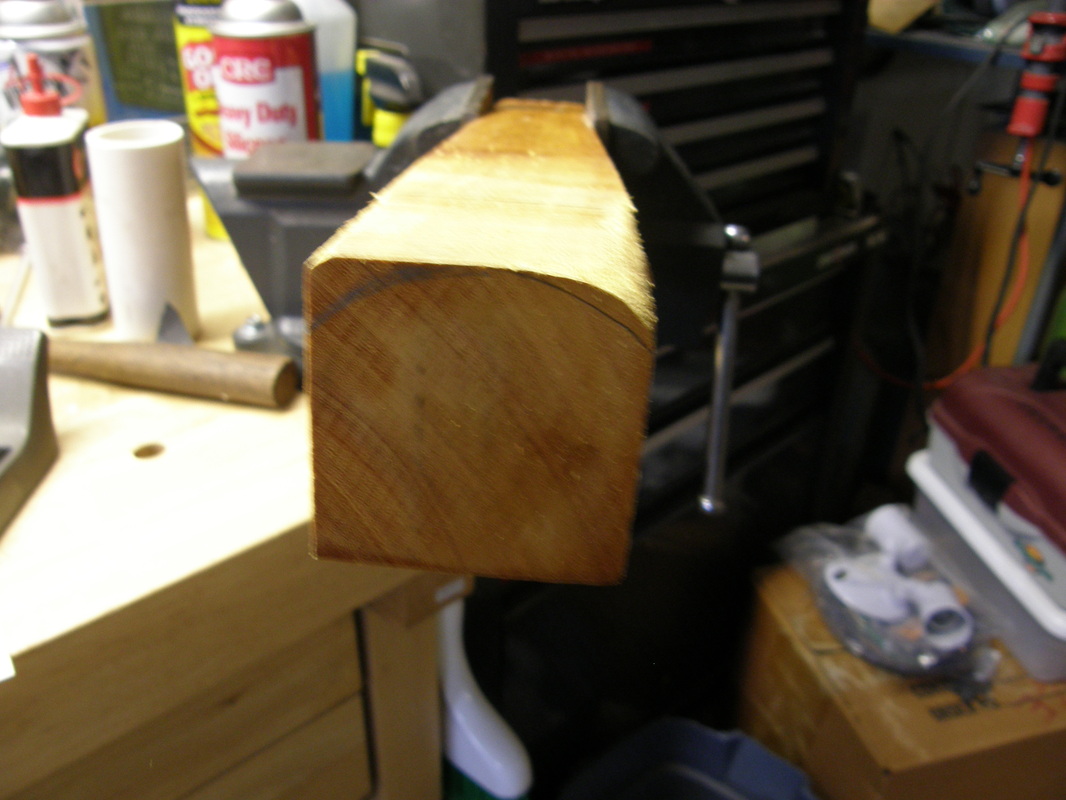
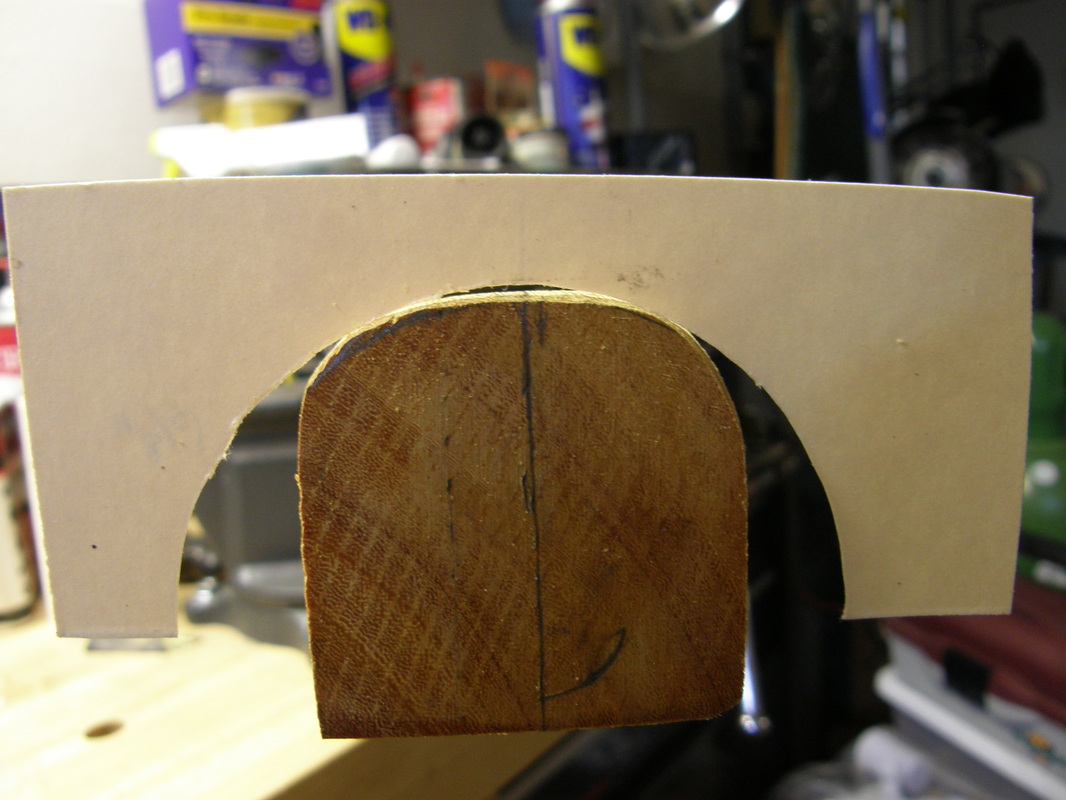
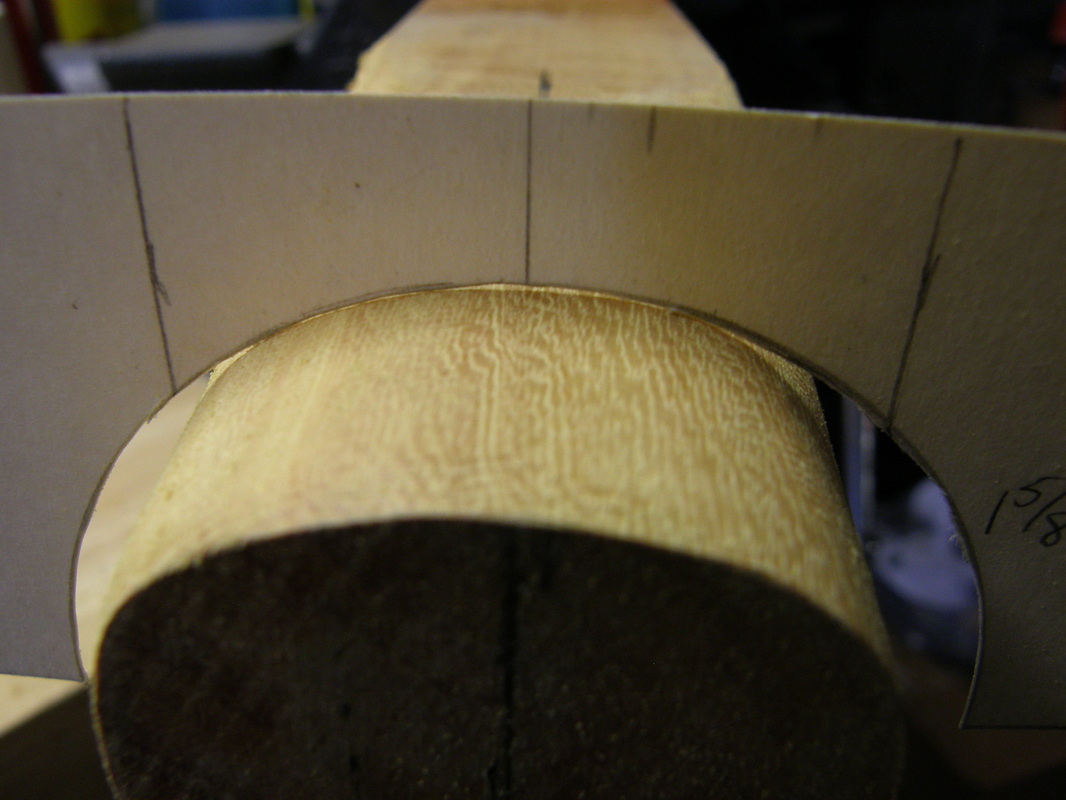
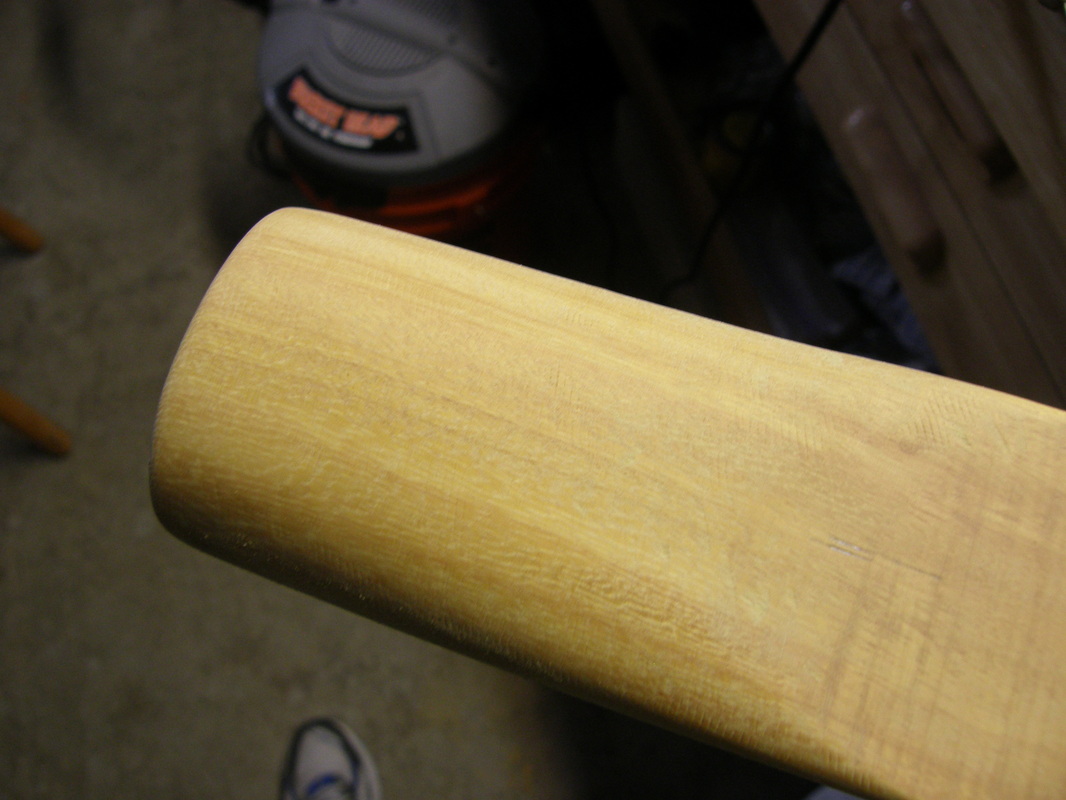
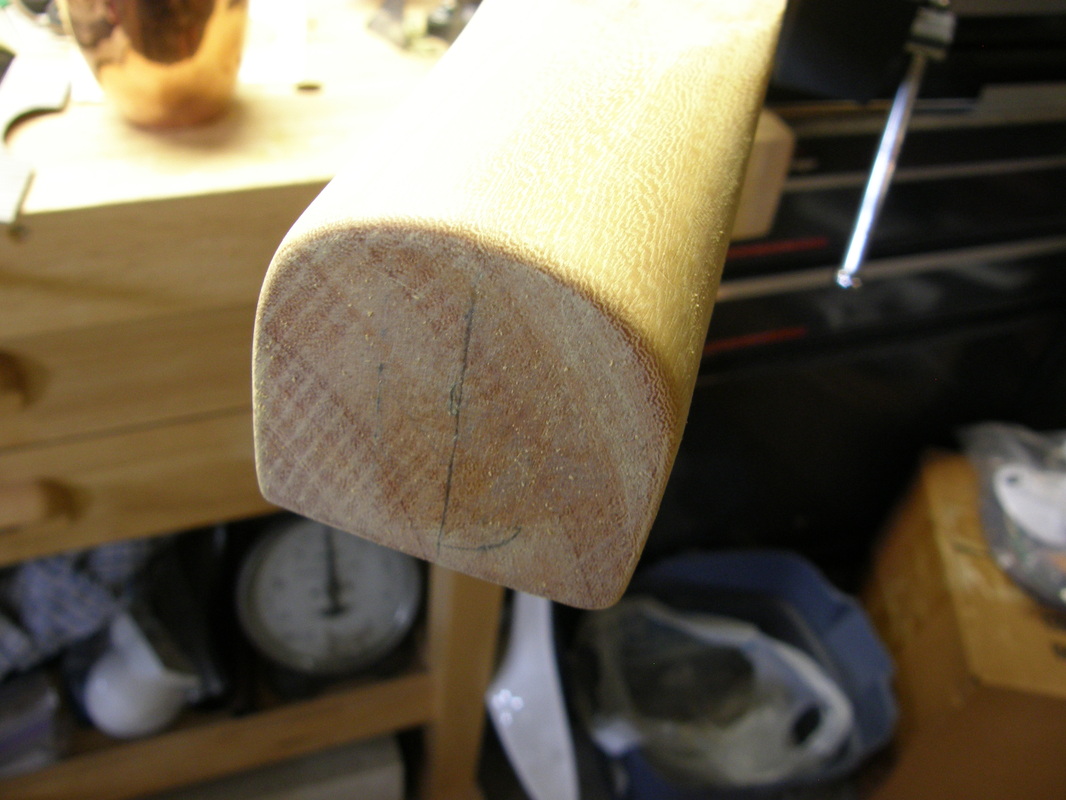
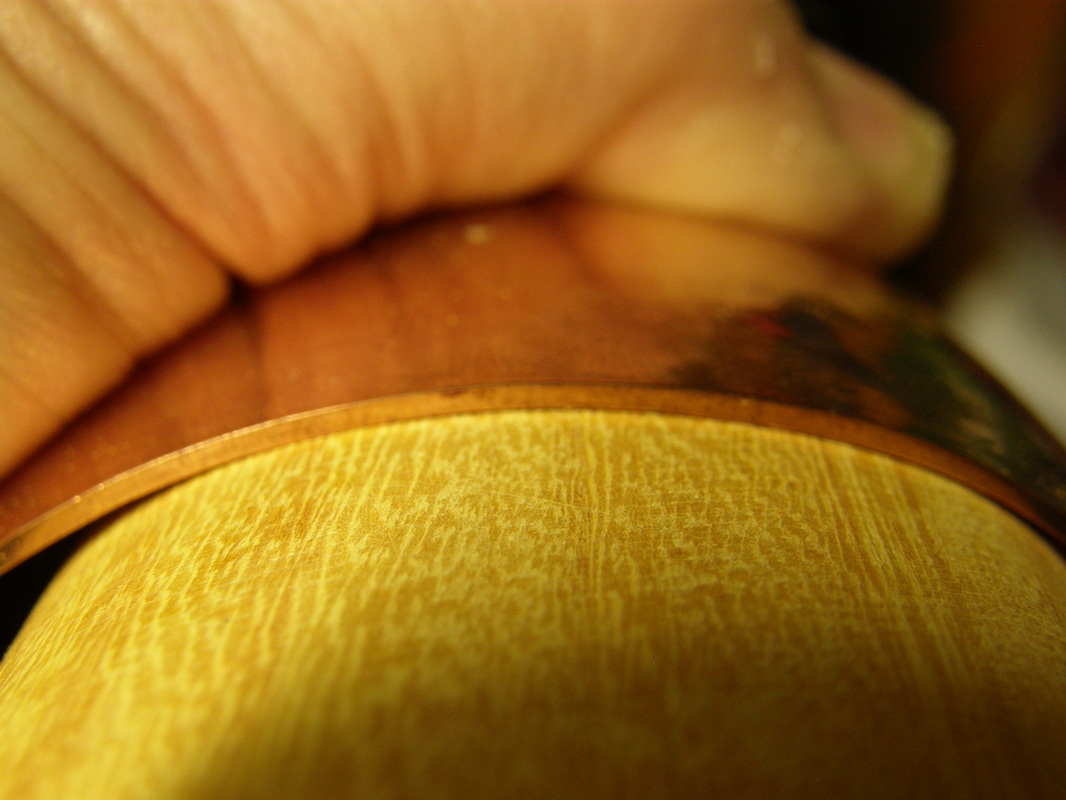
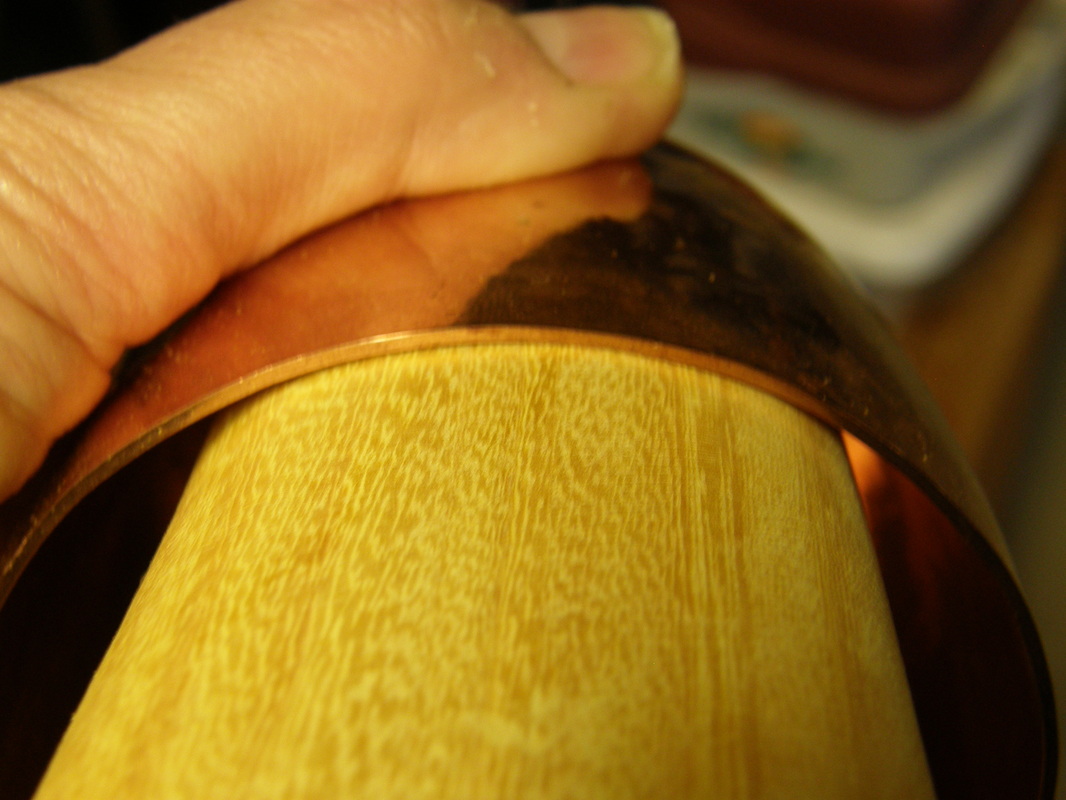
Yes, I have a steel T-stake that would also work but this was an exercise in cutting a wood stake. Today I cut the second wood stake for the lower half of the tumbler - also it should be noted that when I raise another tumbler, this second stake will actually be used first but the reason it was made second was so I could get a feel for working with the wood. This stake is a bit more complex because the diameter of the tumbler and thus the wood, increases as the the height of the tumbler increases from the base. At the base it is 2" in diameter and it is 3.25" at 2" in height. The diameter then stays constant at 3.25" for another 1" of height (thus the other stake). I also cut this stake on the other end of the wood so I have two stakes but only once piece of wood. So, shall we get to the pictures??? And at the bottom there's 4 pictures. Two of the original stake that Liza made and two of mine. When I went to Nechamkin Silver Studio's back in September and learned to raise a tumbler, I started the raising on a wood stake and then changed over to a steel stake. Since then I have gathering my tools and equipment and making a technical drawing so I could make a wood stake such that I could raise another tumbler in my studio.
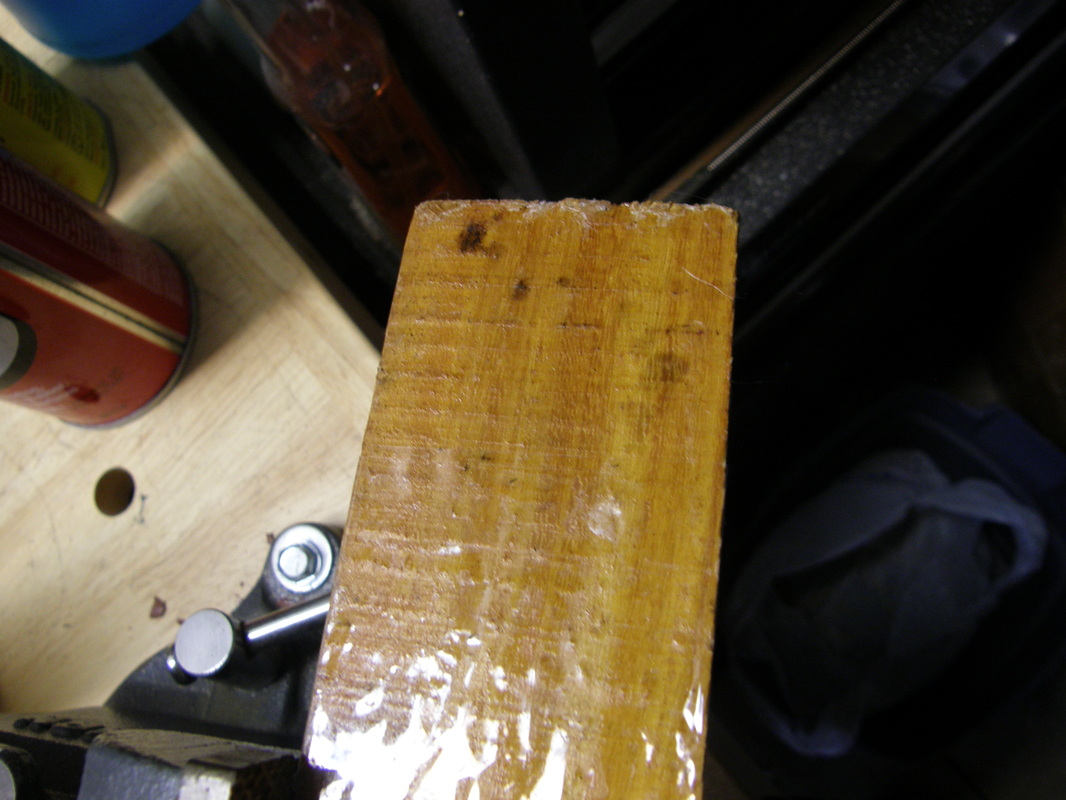
Today I started that project. I went to the wood working store in San Diego and bought a 2" x 2" x 12" spindle blank (Osage Orange wood, as they did not have maple) that would allow me to cut a stake at each end. One end would be for the lower half of the tumbler and have a compound (synclastic) curve since the diameter of tumbler increases with distance from the base. The second stake would be for the upper half of the tumbler and would be a constant diameter. I started with the second stake since it would be easier to make. Into the garage I went with my drawing, templates for the various diameters and my block of wood. Out came the files. Into the vice went to the block of wood and using my templates, I drew marks on the wood for the radius and the distance from the end to indicated where to stop filing. So the project began. Much sawdust was created. Then about 2 hours later after checking with the templates and the actual tumbler and switching from rasps to coarse files to fine files and fine sand paper. The first wood stake I have ever made was done. Once I raise a tumbler on this, I will then get steel stakes made. Last week I was able to get another bottoming stake head on eBay.
What was interesting is that NOBODY else bid on it so I got for a whopping $42 and change and that included shipping. Here are the before and afters.. There is always maintenance work to be done.
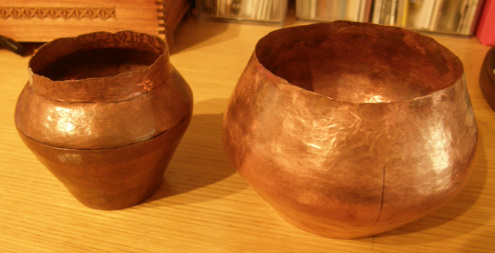
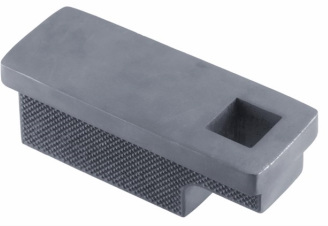
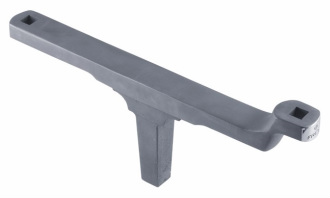
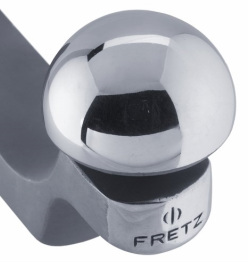
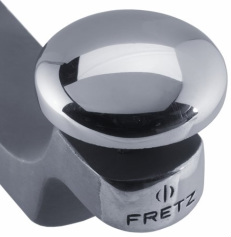
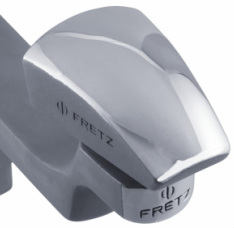
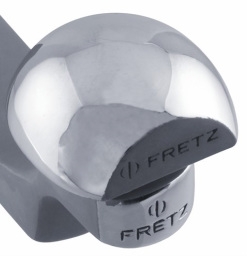
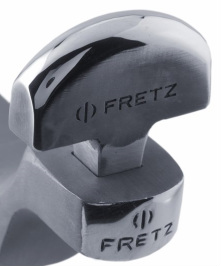
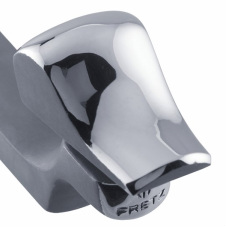
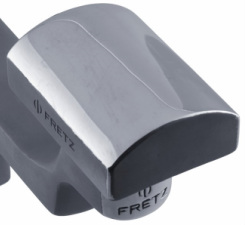
..Put tools away …Put the scrap metal in the collection can ….Accounting …..Write a blog post But the one that takes a bit of time is doing maintenance on hammers. I actually like to work on my hammers but with my busy schedule, this is a task that is put off until I have more than one to work on. I now have 2 hammers that need work on the hammer faces and another 2 that need to have the handles that have to modified. The planishing hammer below needs a deep scratch removed. This is a hammer I picked up off of eBay and it has been sitting, ignored for over a year. Then hammer below that is one of my forging hammers. It has/had a big ding, which has been partly removed but I never finished the work. Lastly, the chasing hammer I picked up at AllCraft, in NYC needs the handle modified and under that is a Japanese wood mallet. The handle is too long so it must be cut down. It is under the chasing hammer so you can see how much I have to cut off. I can remove the dings from the hammer faces today, it is the time to re-polish that will be long. I can work on the polishing during the week, when I get home from the day job. The hammer handle mods I can also do today. All this work will be done in "machine" area of my shop since it generates the most schmutz (it is a great yiddish word isn't it?) Yesterday I was planning on finishing my year end accounting, working on the tool canister, and of course the weekly putting away of tools from last weekends project. But then… Karen H. ( a FB friend and fellow metal head) posted that Bill Fretz was at the Orange County Fairgrounds, at the Bead show , selling his tools plus there was a show discount of 30 PERCENT!!! I dropped everything, got my self dressed and was out the door and into my car in less than 30 minutes. But before I left I grabbed two items that I wanted to talk to him about (more on what these were below so keep reading) . WHY? Well, first off, lets all admit we really, really, REALLY like Bill's tools. Secondly, I had been in contact with Bill recently about getting several of his chasing hammers that my students would use in the workshops I would be giving (starting) next year. I had thought that I would get then next year while at Tuscon so finding out that he would be in So. Cal. this weekend was a shocker and yet an opportunity to go get them and talk to him. So, out the door I flew and no, I did not get a speeding ticket on the way to OC Fairgrounds though it was a 50 minute drive for me. After I arrived and parked my car, I saw that the bead show as in 3 connected building and there was NO vender list - now to find him. I decided to go in the building on the left and walk my way through the rows of vendors until I found him. Once I entered the building, I went down the row that was furthest to the left - one must be systematic in the search! I had passed only about a half dozen vendors, scanning left and right when THERE WAS THE FRETZ BOOTH. Yes, all caps, because that was how excited I was. Bill was there, as was his son who runs the manufacturing facility in Vietnam; I walked up, introduced myself (initially no recognition) and how I had emailed him about the hammers (yes, there was a glimmer of remembrance, whew!) . So we discussed hammers and I selected the one I wanted and we set 4 aside. Then I wanted to talk to him about his larger stakes, not the small/miniature stakes he has for jewelry, I wanted to talk about the newer, larger forming stakes (you can look at them here: Otto Frei) that are for cuff bracelets and what I do - smaller hollow forms. I then took my two raised vessels out of the bag I was holding. I might be presumptuous, but I really do think his eyes lit up! For several minutes we talked about raising and how not many metal smiths are raising these days. I explained that I brought my vessels because I wanted to make sure that these new larger stakes would allow me to finish these and his miniature stake set that I had bought, were not the correct size, plus that I don't have the many of the stakes in my studio to go where I was going with my work and would some of the the other Fretz stakes fit my need.
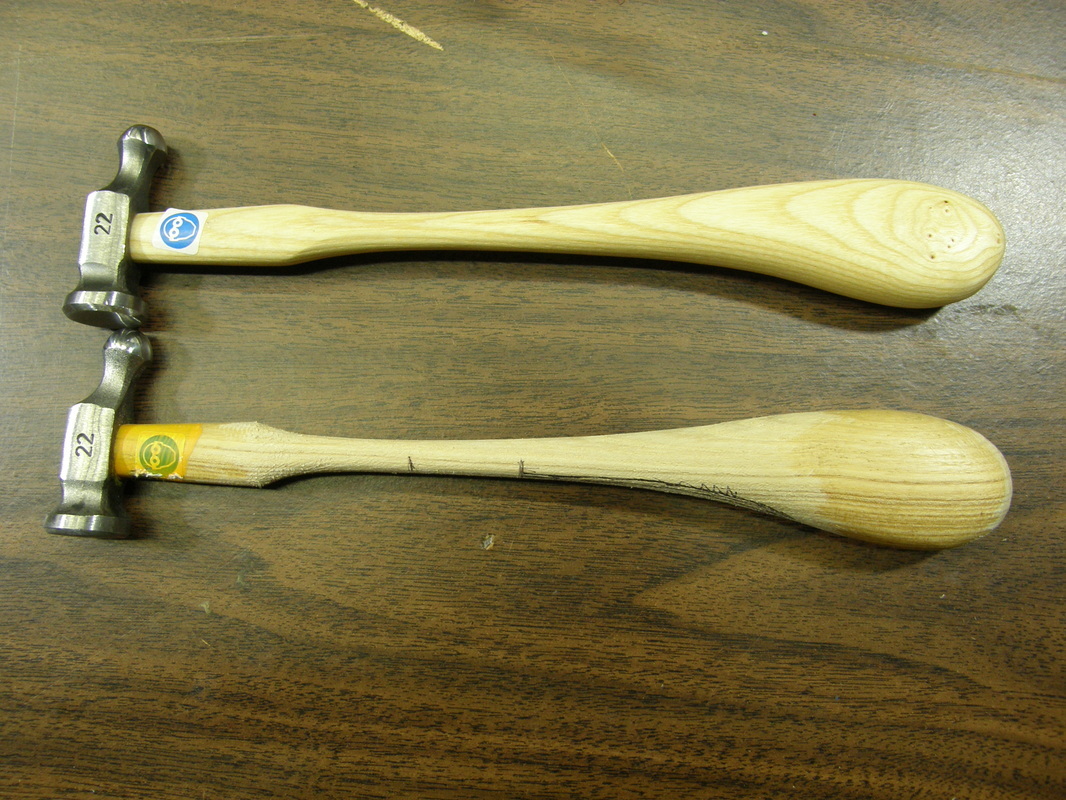
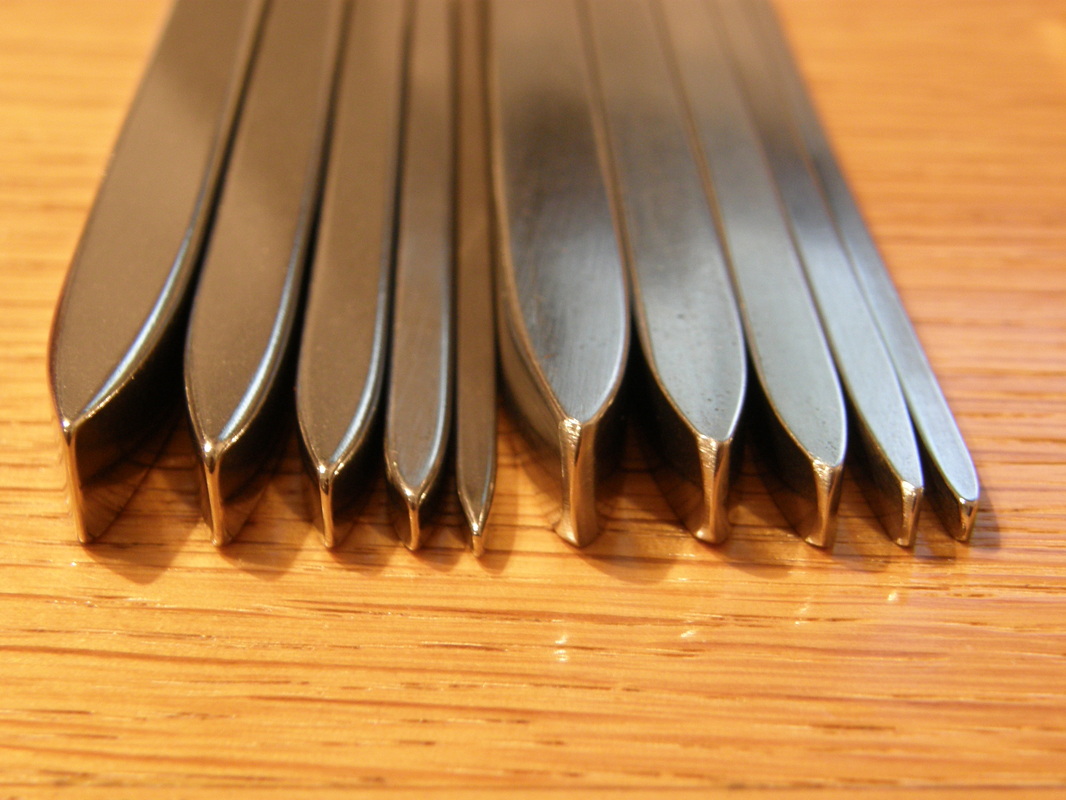
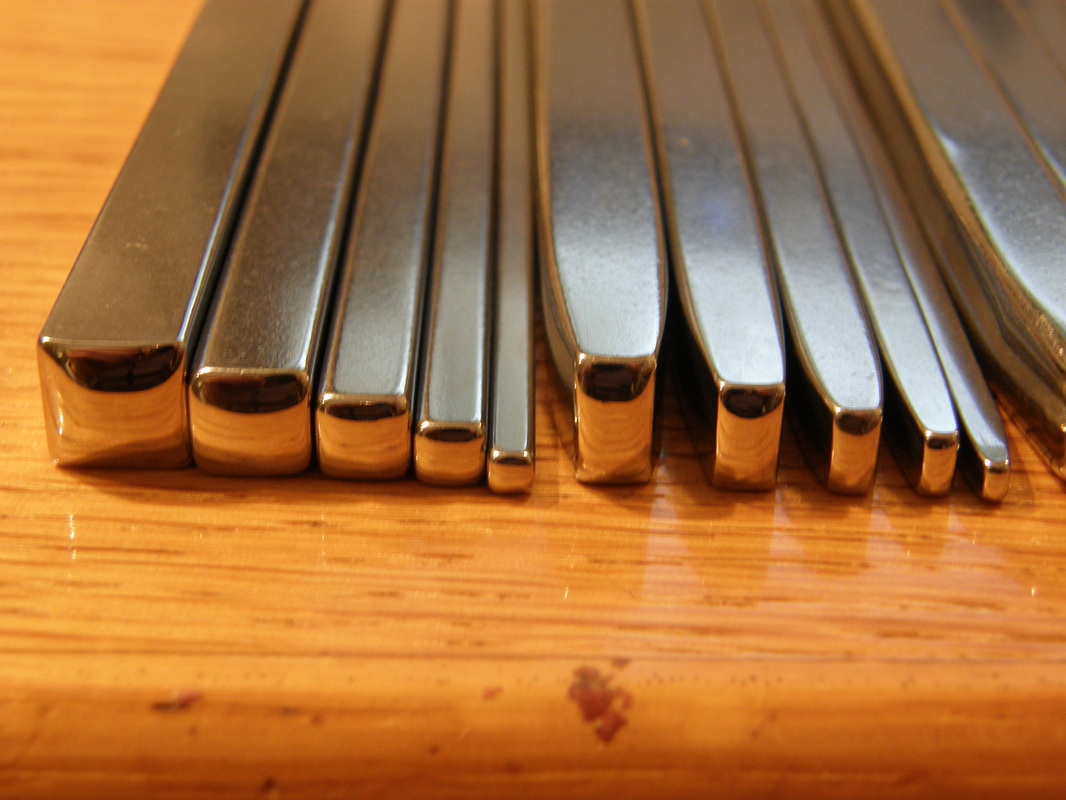
We then spent some time, matching the complex and simple curves to the two vessels and found those that would work. I also had to get the stake holder and extension arm…. AND just for good measure, a few more based upon vessels I had in my head. After all of this, and over an hour had gone by, we talked more about other silversmiths, other stakes he is planning on having made plus much, much more as he told me a few pieces of information that would help me solve a few minor situations that I had come across. My head was in the clouds. My heart was actually racing I was so excited. At that point I had to pay the piper and so, I pulled out my credit card and settled my bill, took my new tools and headed home. All I have to say is that IF one day you get a chance to talk to Bill Fretz, DO IT. He is a wealth of knowledge, information and is very helpful and willing to share what he knows. Here is what I bought - enjoy and don't drool too much. (images stolen from the Rio website) Last year, in November I took my first chasing class with Valentine Yotkov, gosh it does not seem like a year but it has. Next week I will be in NYC/Brooklyn to take my FOURTH workshop with him but this blog post is not about that, it is about chasing hammer handles, yeah and about one of mine in particular. During that first workshop (here, here and here) we ordered some new hammers from All Craft. I bought 2 - a 22 mm and a 30 mm. Val also showed us how to customize the handles (see picture below, the hammer handle at the top has not been customized and the one on the bottom is partly customized) - to narrow the neck to give it more spring and how to get the end of the handle to fit into our hand I have since bought the 26 mm and 32mm and 33 mm. The 33 mm is actually a bit heavier than the 32 and since I am currently chasing one some pipe (about 14 gauge) that I have turned, into a canister, this heavier hammer is what I need.
I have modified the handles for the 26 and and the 32 but I had not done the 33 yet and I was using it all day, yesterday. After about 5 hours of work, I realized that
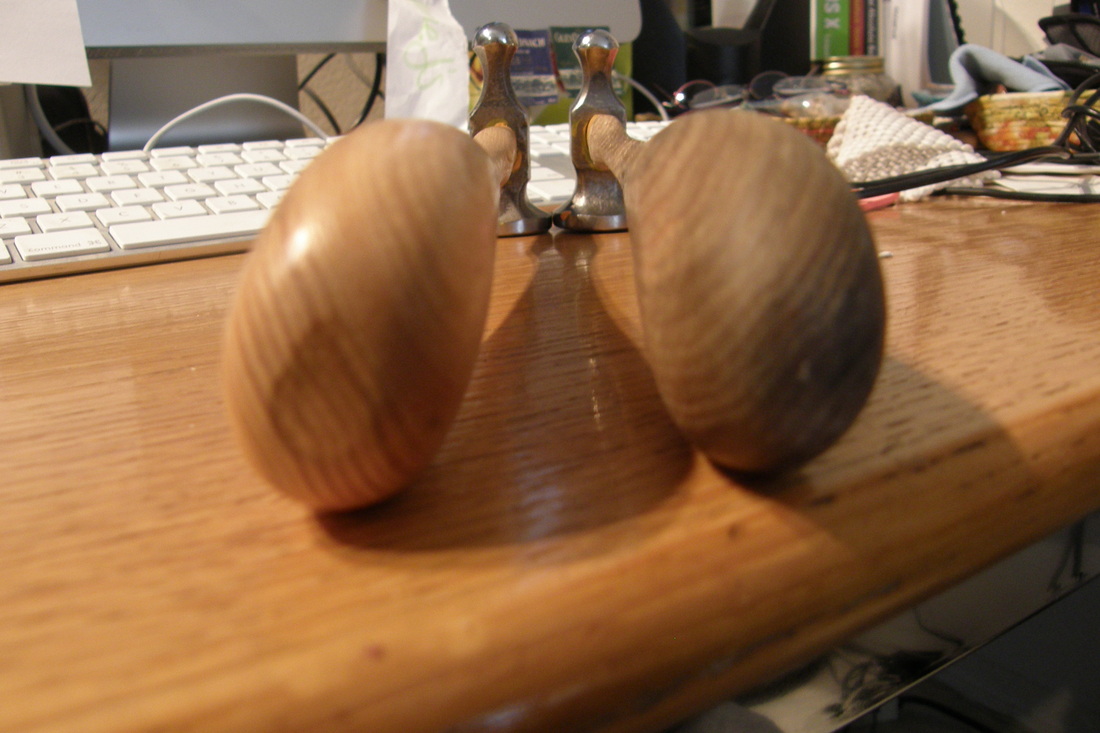
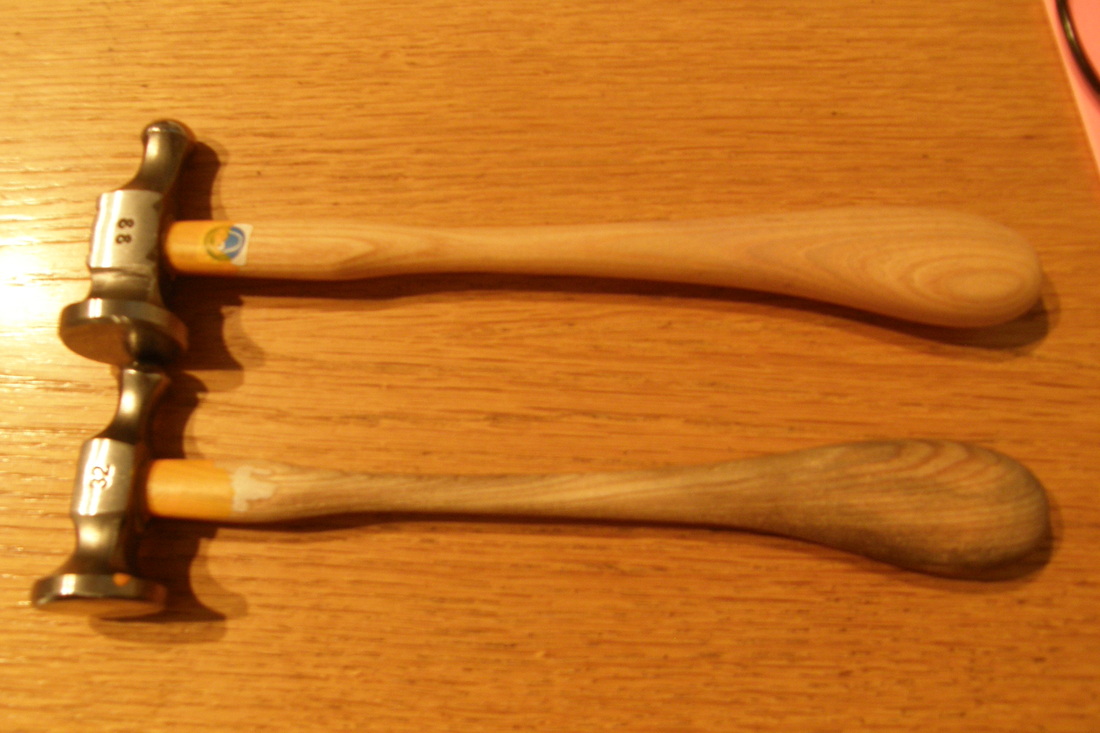
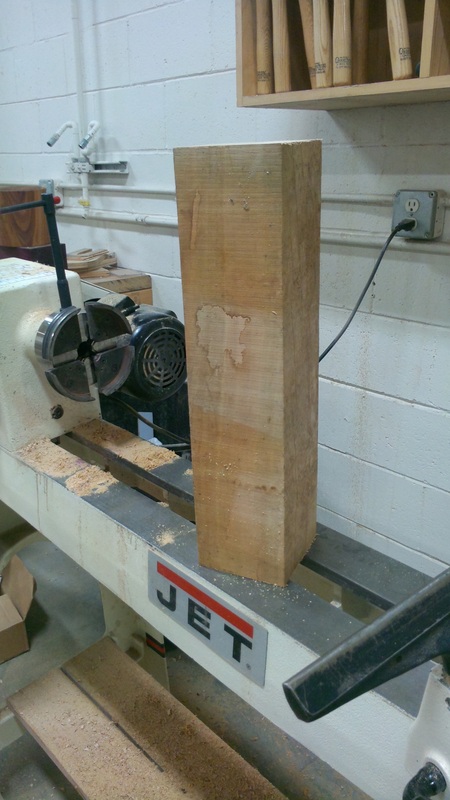
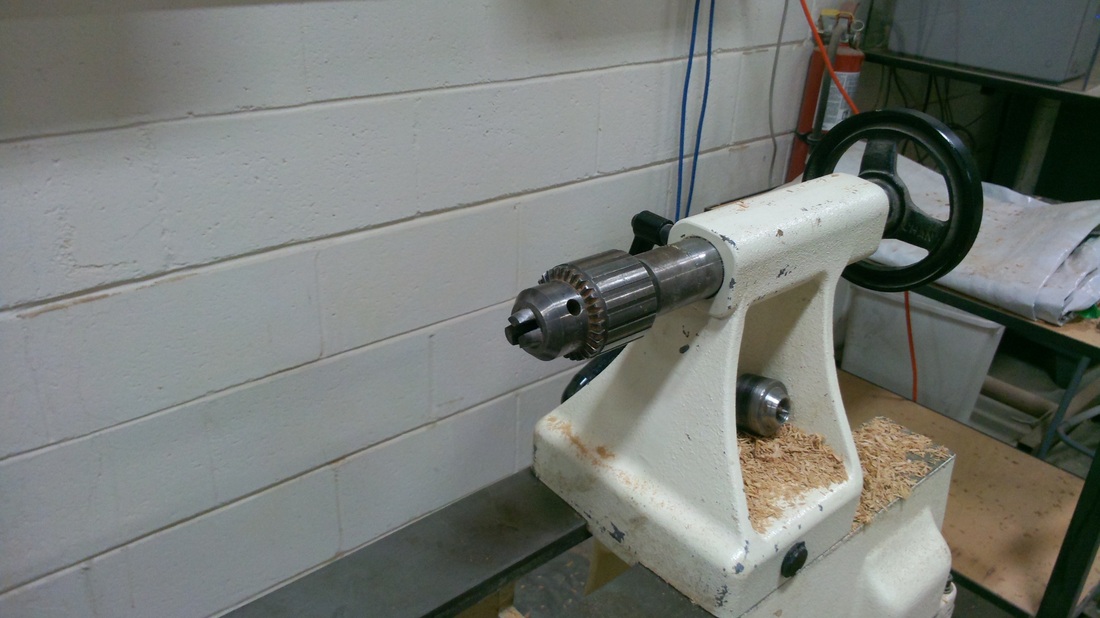
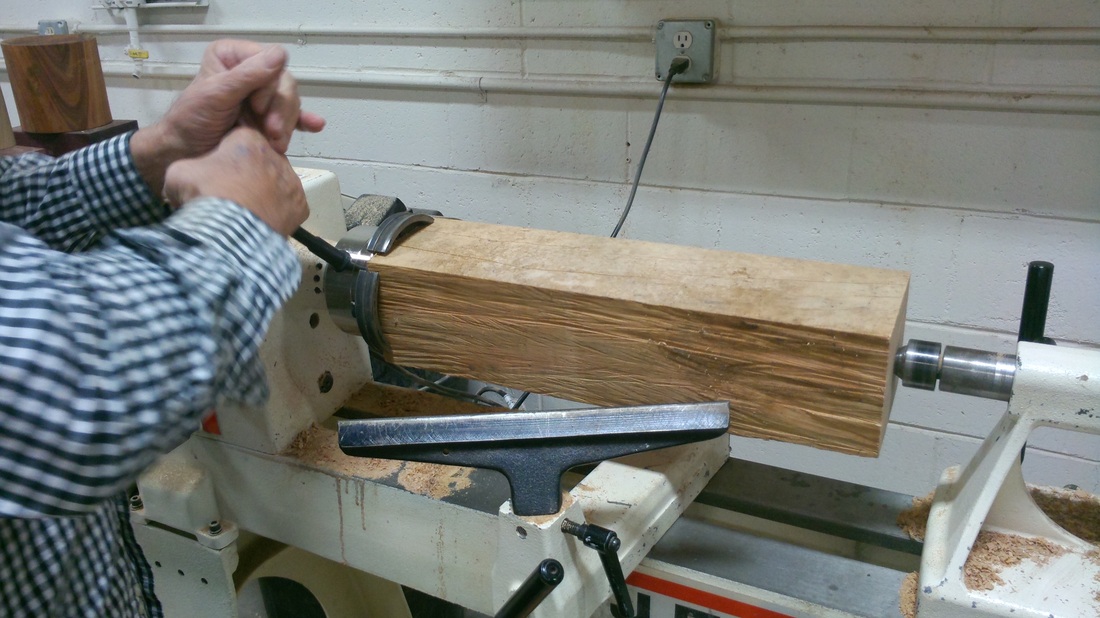
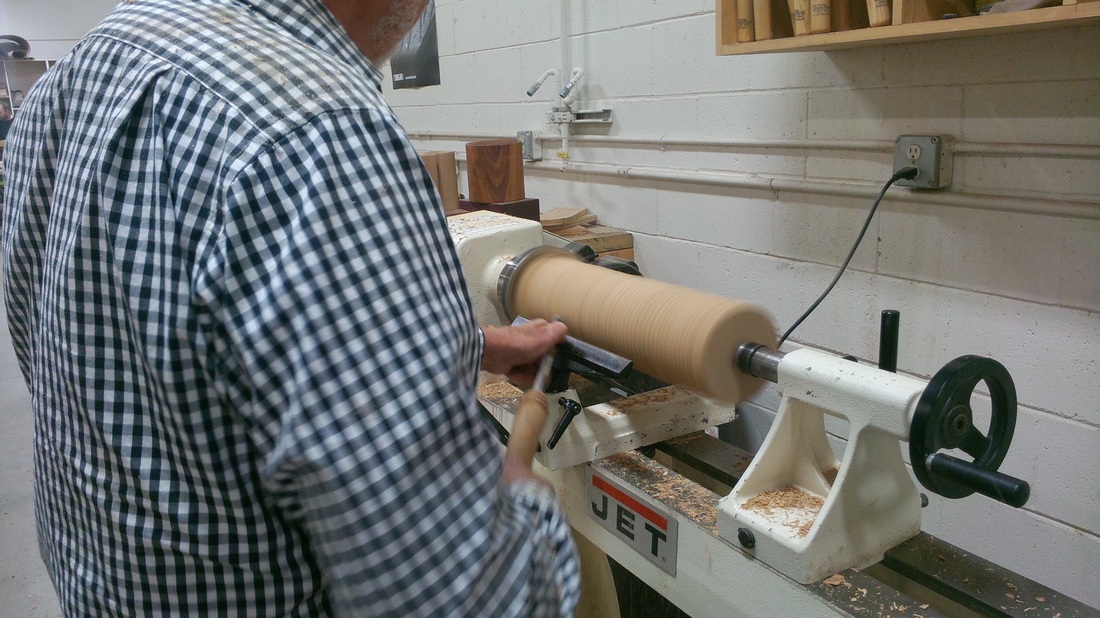
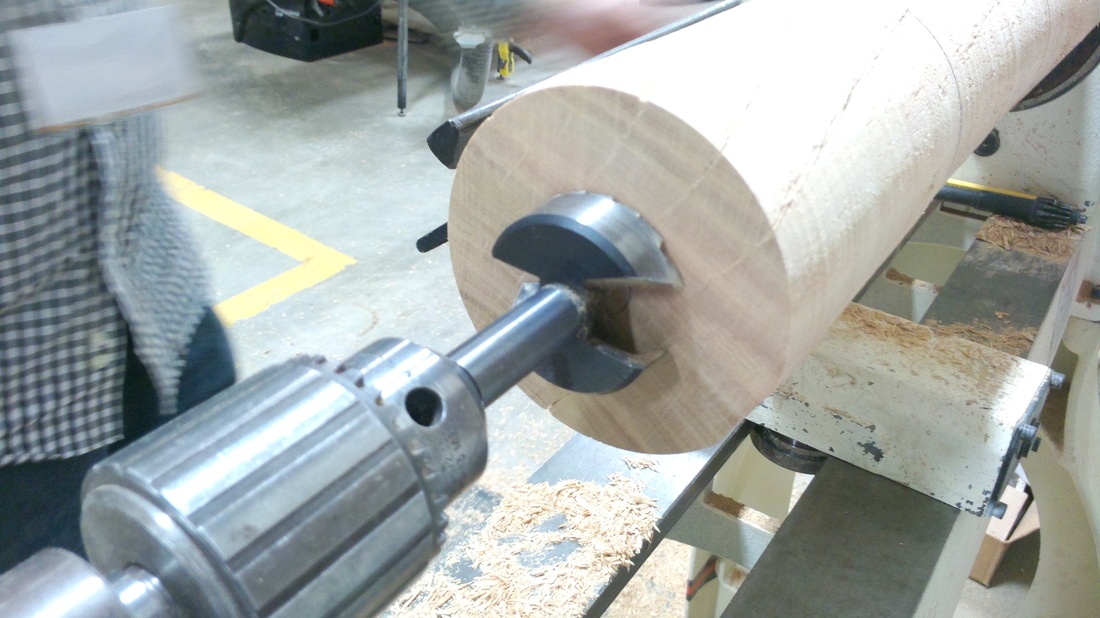
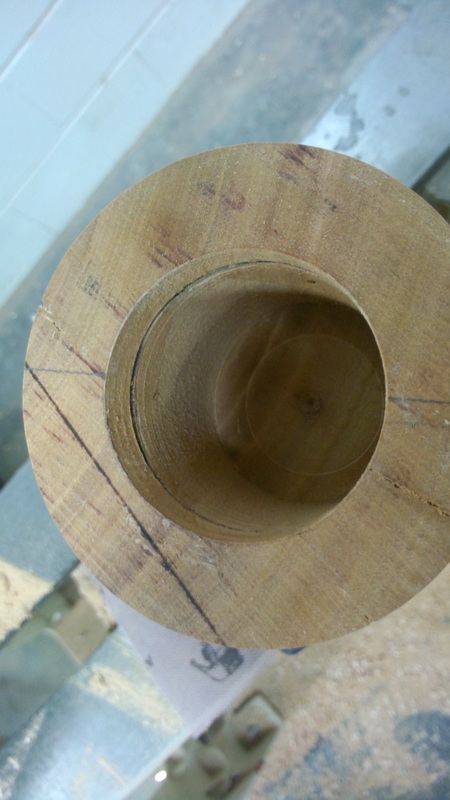
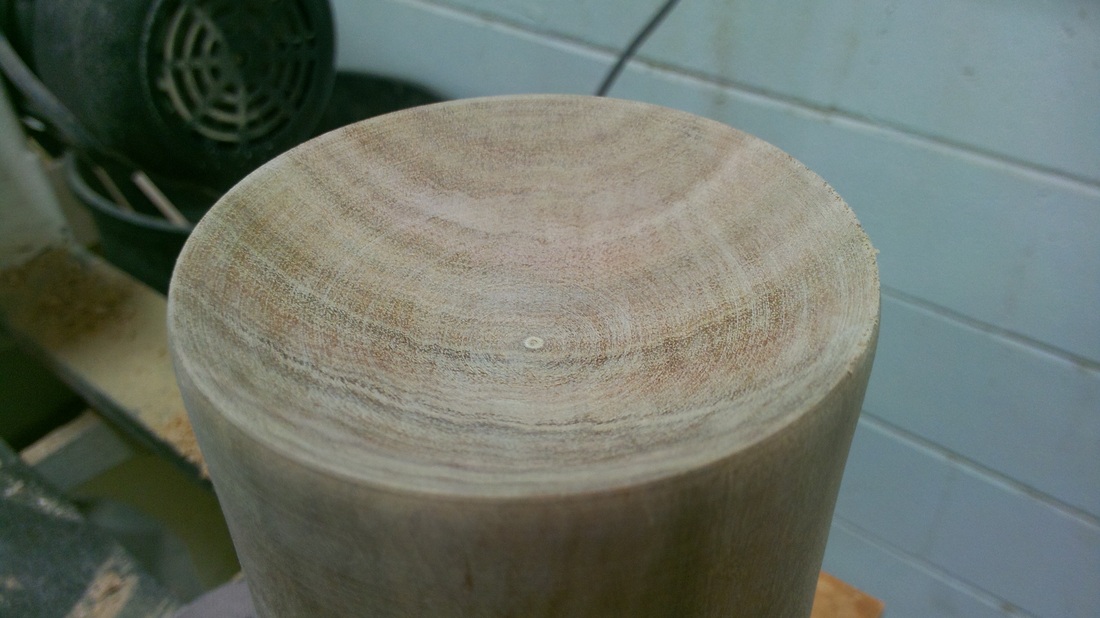
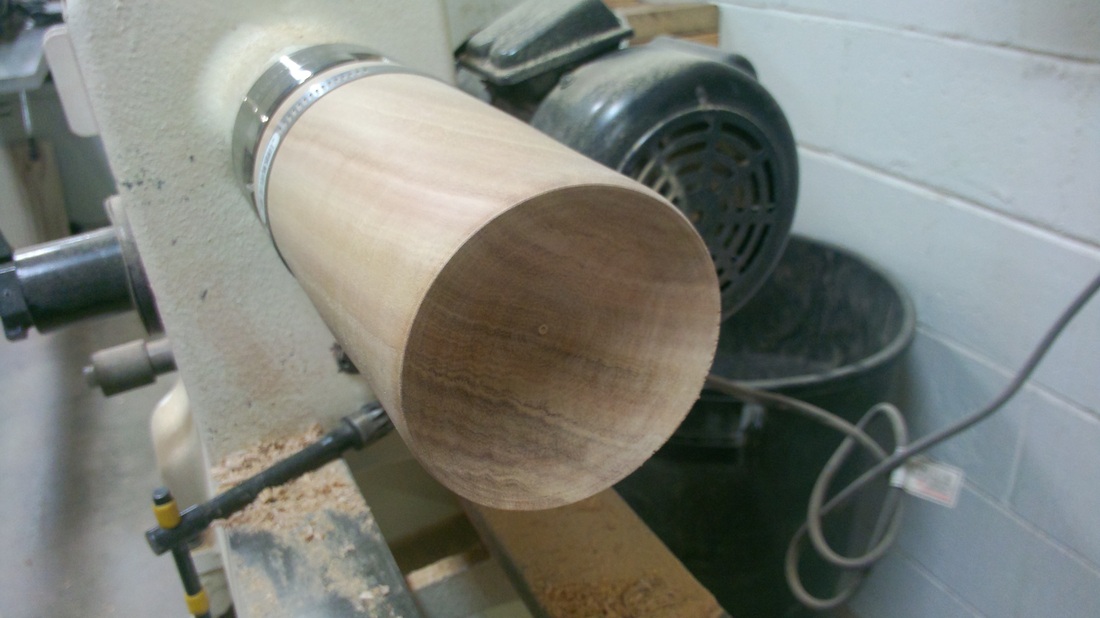
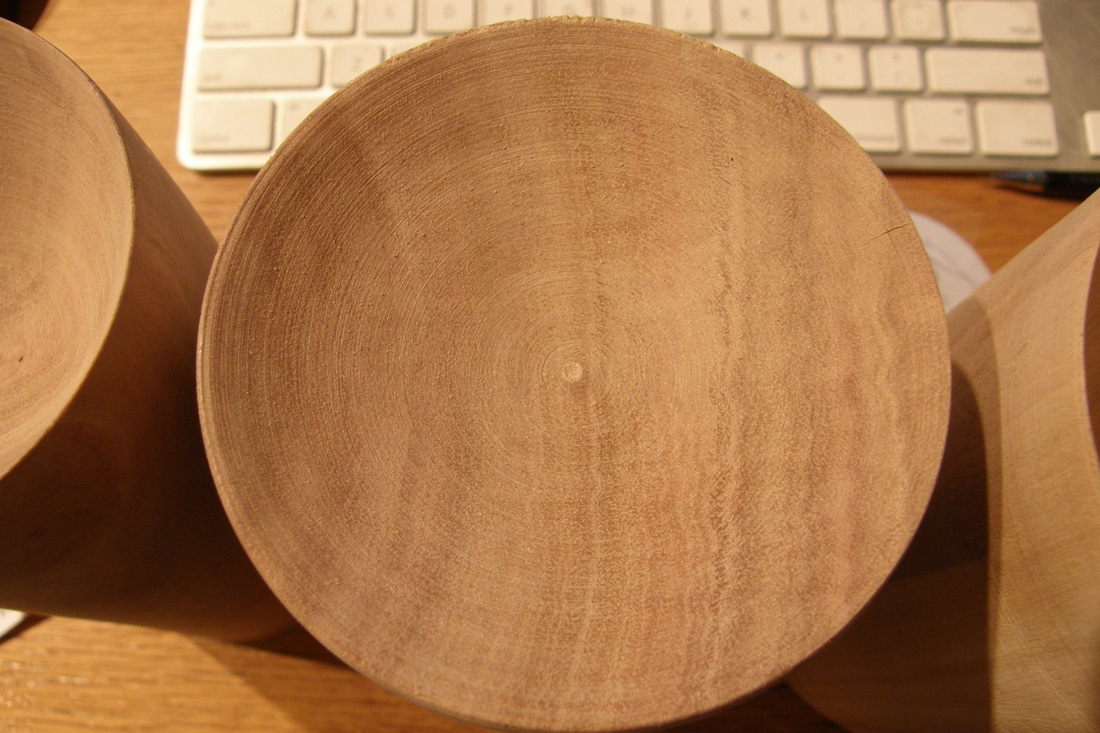
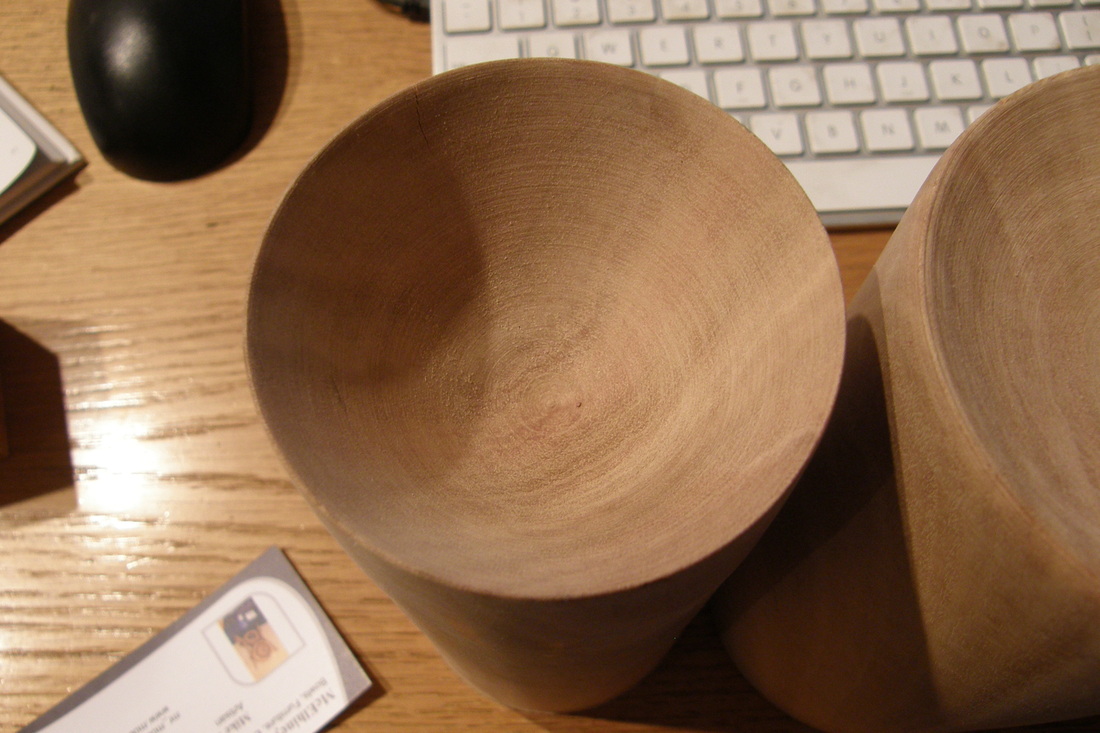
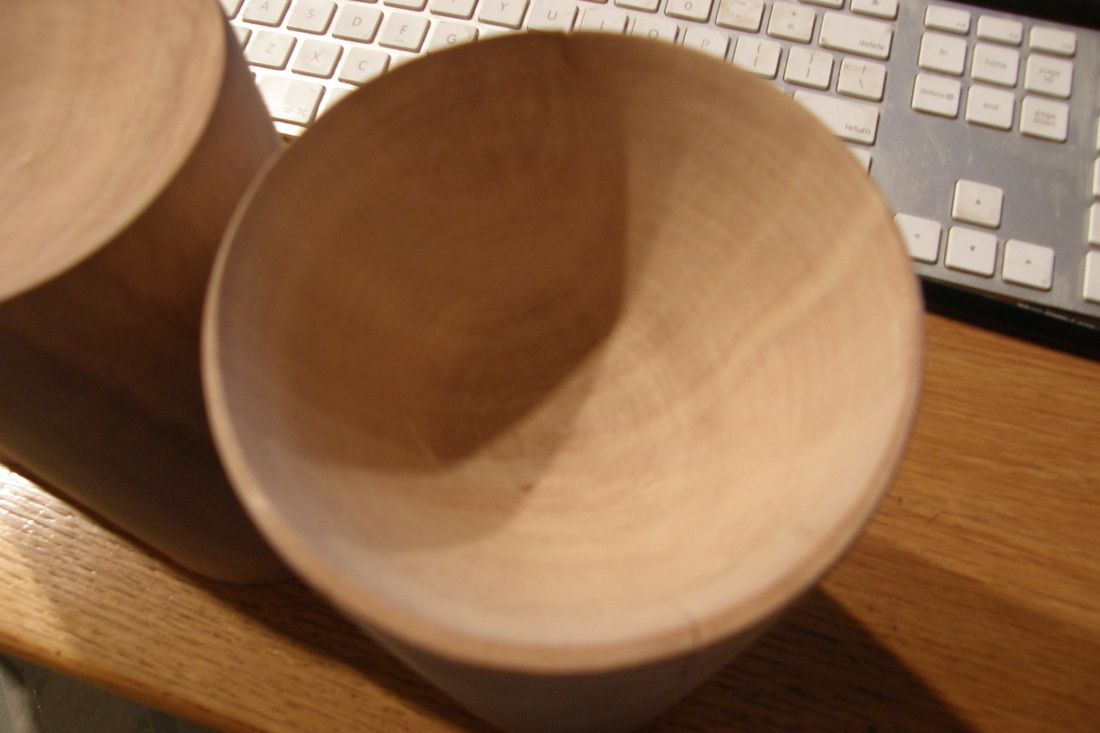
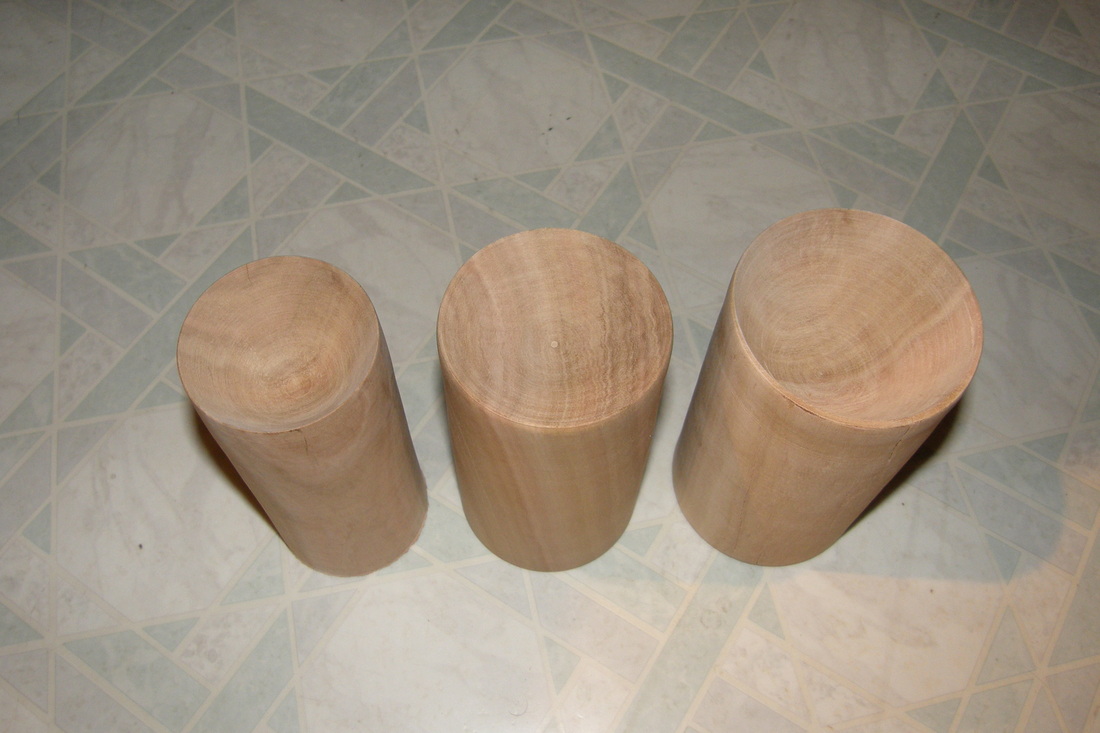
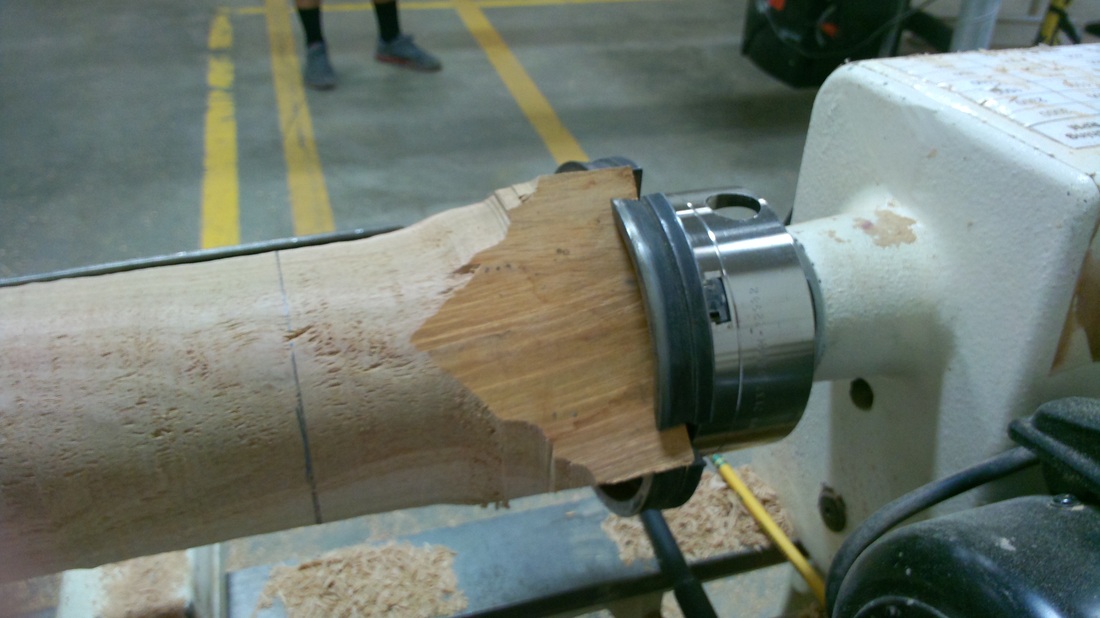
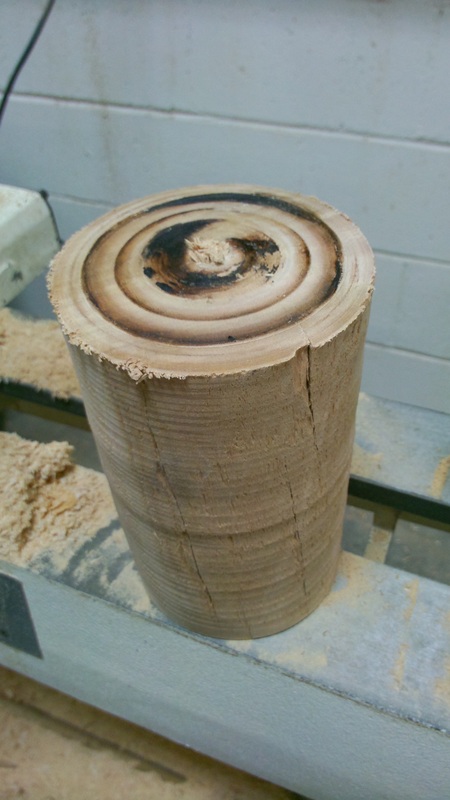
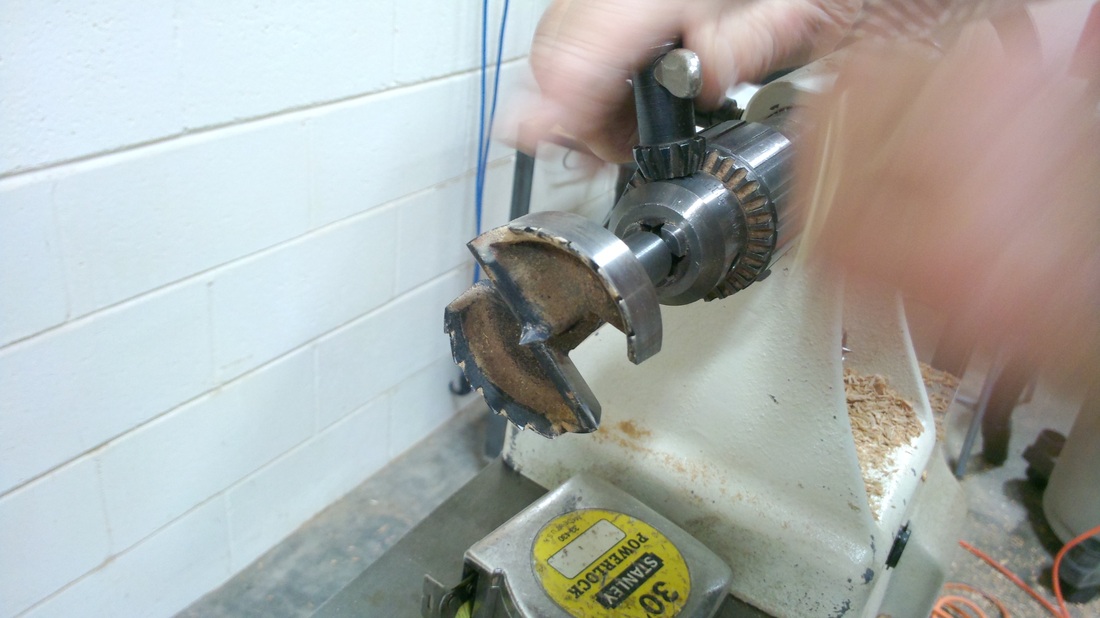
So I put the hammer down and that is when I noticed that the handle was canted sightly to the right when aligned to the center of the hammer head. This would not seem odd to the average chaser. Wait, don't take that the wrong way, I am not saying all chasers are average. I just mean that if you look at the majority of chasers, they would not find this odd. Why? Well they are probably all RIGHT-HANDED so a hammer handle which leans to the right (position and not politically, sheesh) in a right hand would feel normal. Yet, for a lefty, it literally and figuratively rubs me the wrong way. Now, I am pretty certain that the handles on the other chasing hammers were not canted in one direction or the other but I could not be certain cause they were all modified but if they had been leaning in that direction they had been, I think I would have some memory it with a note to correct it while I was doing the modifications. Here is a picture of the 33 (on the left) and another handle end, you can see it is leaning. The second picture below show the size of the 33 head in comparison to the 32, it is quite a bit bigger ,and for the handle you can see how much material I will be removing. I am off to the garage to customize the handle and correct this handle problem. Two weeks ago, I took a basic wood shop class and made a bird house. That class was the prelude to what I did today. I took a private lesson in WOOD TURNING. YES, wood turning. Why? Well, I want some larger wood "dapping" blocks for when I am sinking bowls. I have the small wood and steel cube's with the dapping punches but the largest piece of metal they will take is about 1.5" diameter. I have 2 other wood sinking block and they take 3", 3.25", and 4.7" diameter pieces and most of the dishing areas are not even 50% of the diameter deep some are not even 25%. PLUS I have the Pepe Tools Cupola Punch and Die Sets, The issue is I need some in between sizes and I want them deep - at least 50% of the diameter if not more so I can get a good wall on the bowl I am sinking Thus, learning to "turn" a bowl allows me to make my own in the sizes I need. At 11:00 am I met with Mike McElhiney a wood turner in San Diego and I had a 2+ hour lesson. Before we started, I showed him a few of my existing dapping blocks and what I can make with them so he could understand what I wanted to do with what we were going to be making. Mike had brought the wood and tools and showed me how to set up the lathe, put the wood in the chuck, turn the outside, drill a center bore and then turn the bore into the "dishing" bowl. The wood chips and dust were flying everywhere (even down my shirt and into my BRA!) I (we actually) made 3 dapping bowls and a 4th blank (outside turned only) for one more. The end result:
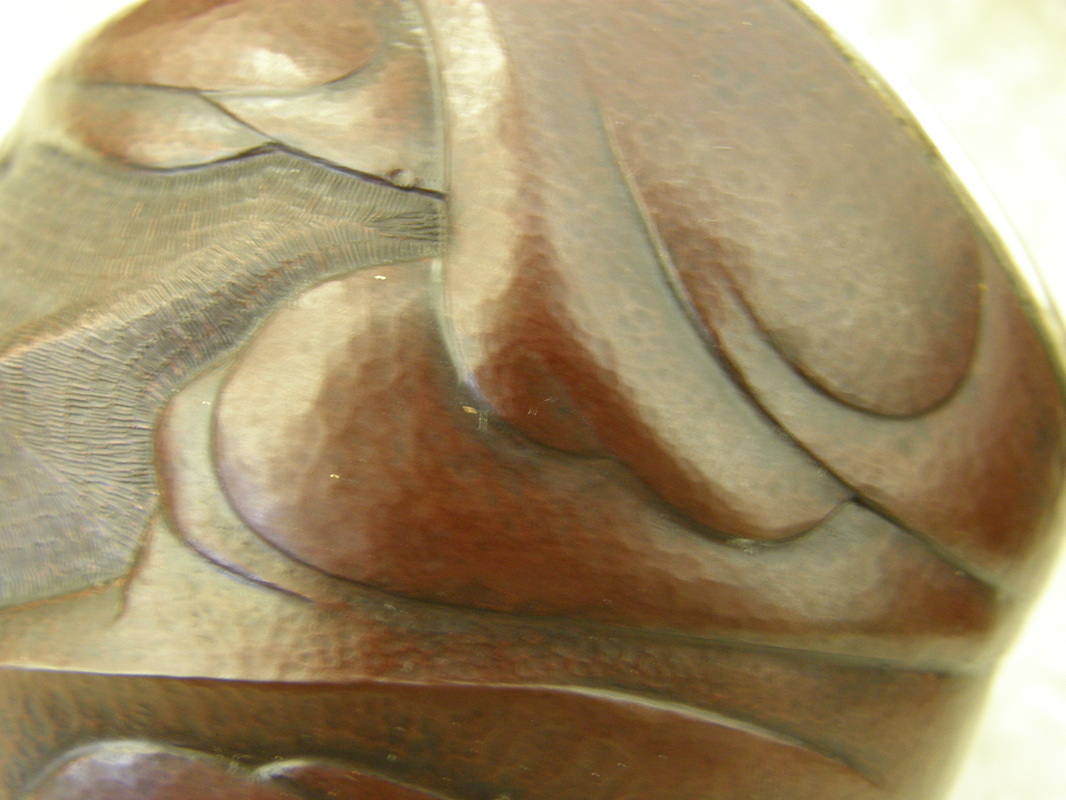
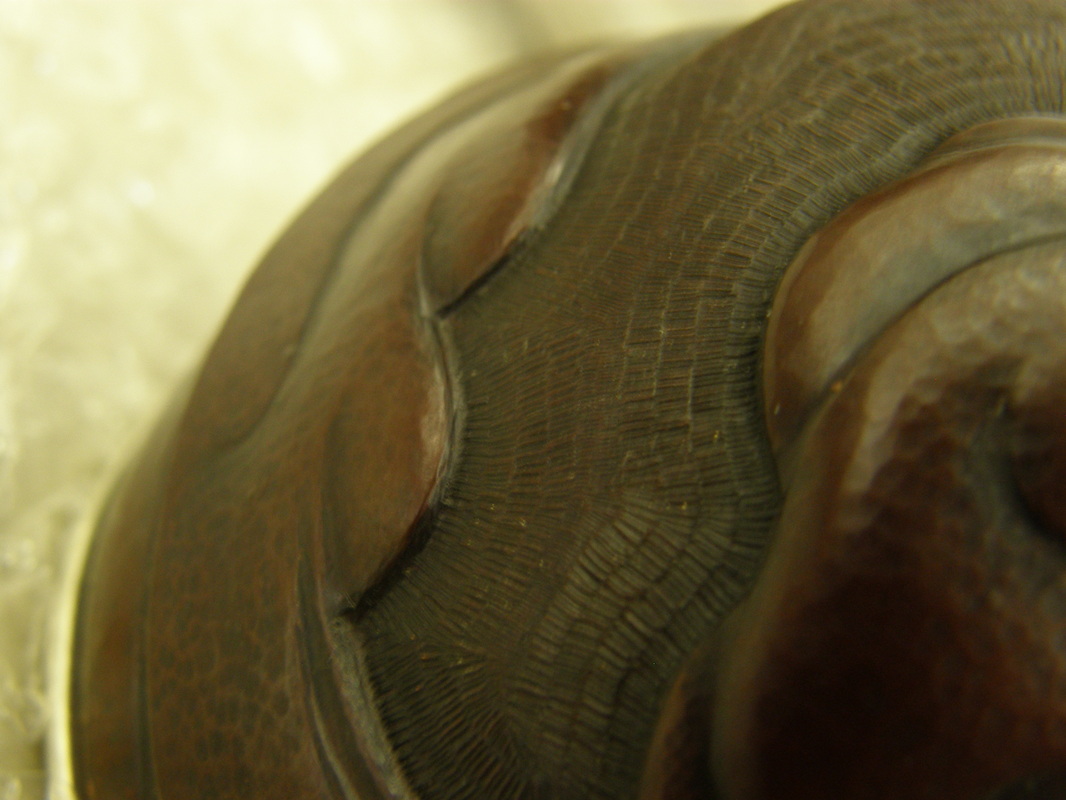
I sink some metal in them, in the next few weeks to test them. Then I will get back together with Mike for another lesson and then make some with specific dimension Here are some pictures and at the end a very short video of Mike turning the big block of wood round. It was a busy week at work with lots of unintentional overtime on my part. You know how it is when you are working on a project, time just gets a way from you and the next thing you realize is that it is 6:30 pm and everyone else has left. As a result I got home later than I expected and I had no evening time to do any sanding on the anvil or plan the next projects.
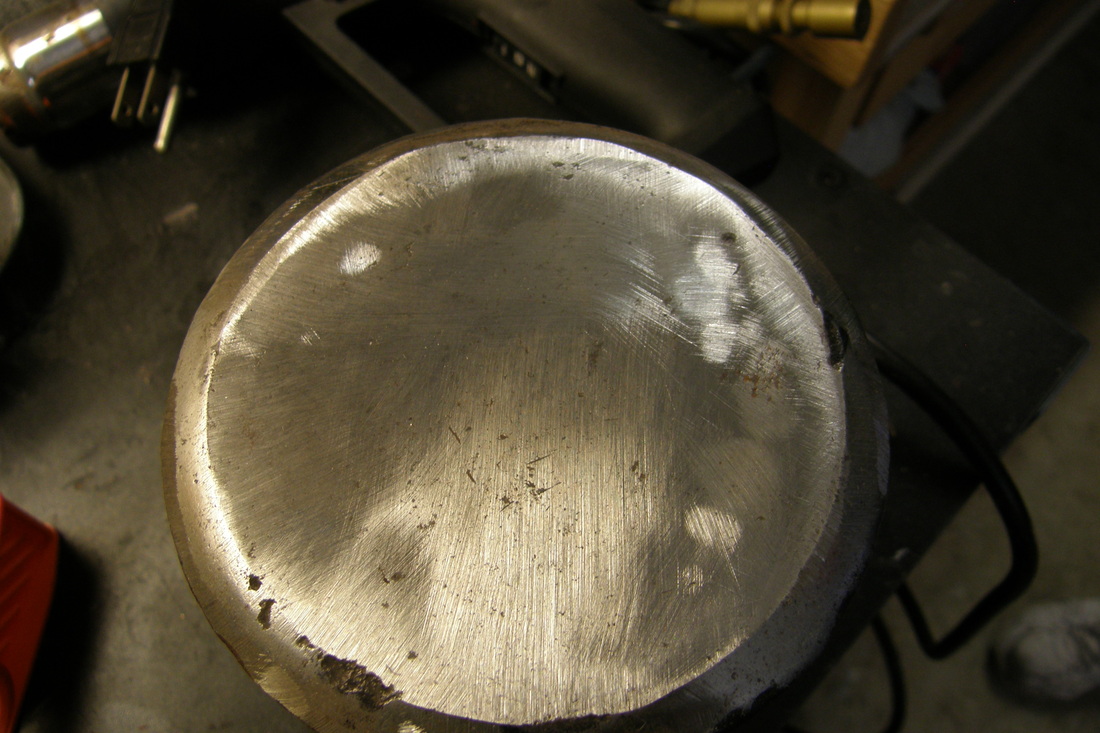
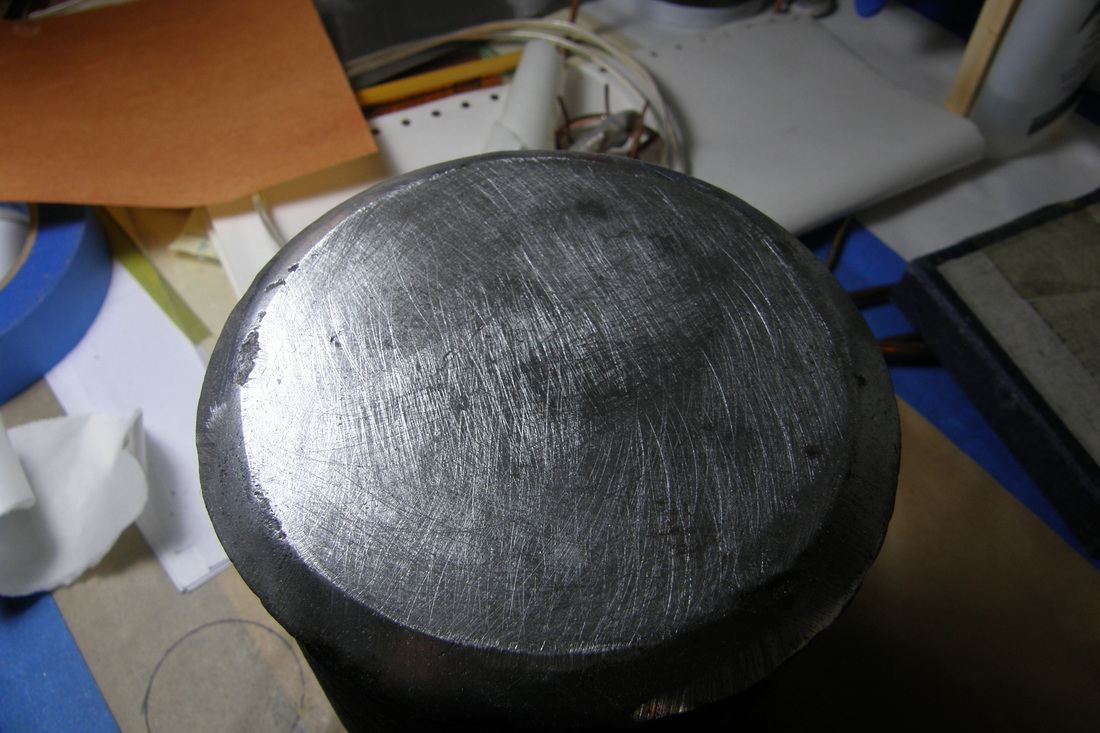
But that is what I hope to do today. I have placed the 100 grit on my sanding block and hope to get the top of the anvil started with that. One thing I have noticed about the anvil is that over the course of the week a bit of fine rust appeared on the top surface, but not everywhere, and there are dark spots which are not rust. I am thinking that this anvil might be handmade and that the metal is more iron than steel. I removed the rust early this morning but maybe next week I will post a picture of it but now I know to put a very light coat of machine oil or WD-40 on the top. The other thing I will be working on today is my design for next year's fair entry. That will take several weekend to sketch out and finalize so IF I start now I won't be rushing about at the last minute next year. |
Archives
June 2026
Categories
All
|
||||||||||||


RSS Feed